
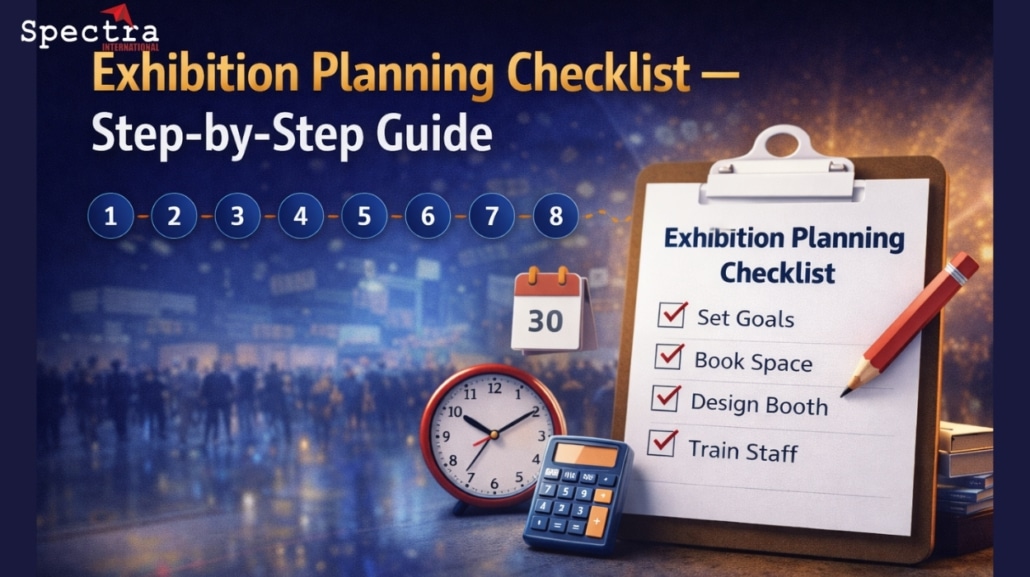
Exhibition Planning Checklist – Step-by-Step Guide
Participating in an exhibition is one of the most powerful ways to promote your brand, showcase products, and generate quality leads. However, exhibition success depends heavily on planning. Without a structured approach, even the best ideas can fall flat. That’s why having a detailed exhibition planning checklist – step-by-step guide is essential.
This guide walks you through every stage of exhibition planning—from goal setting and budgeting to booth design and post-event follow-up—ensuring nothing is missed.
Step 1 – Define Clear Exhibition Goals
Before booking space or designing a booth, define what you want to achieve.
Common exhibition goals include:
Brand awareness
Lead generation
Product launches
Networking and partnerships
Market research
Clear goals shape your booth design, staffing, marketing, and budget decisions.
Step 2 – Set Your Exhibition Budget
Budget planning is a critical step in the exhibition planning checklist. Your budget should cover all expenses, not just booth construction.
Include:
Exhibition space rental
Booth design and fabrication
Marketing materials
Travel and accommodation
Logistics and storage
Always keep a buffer for unexpected costs.
Step 3 – Choose the Right Exhibition
Not all exhibitions deliver the same results. Select events that align with your target audience and business goals.
Consider:
Visitor demographics
Industry relevance
Past exhibitor reviews
Event location and dates
Choosing the right exhibition ensures better ROI.
Step 4 – Book Exhibition Space Early
Early booking provides better booth location options and often saves costs. Corner or island booths offer higher visibility and footfall.
While booking, confirm:
Booth size
Open sides
Power and internet availability
Venue regulations
These details affect booth design and layout.
Step 5 – Design an Attractive Exhibition Booth
Your booth is the face of your brand. Invest in a design that attracts attention and communicates your message clearly.
Effective booth design includes:
Bold visuals and branding
Open and welcoming layout
Clear value proposition
Proper lighting
Custom or modular booth designs should align with your exhibition goals.
Step 6 – Plan Marketing & Pre-Event Promotion
Exhibition success starts before the event begins. Promote your participation through multiple channels.
Pre-event marketing ideas:
Email campaigns
Social media announcements
Website banners
Event invitations to clients
Pre-promotion increases booth traffic and engagement.
Step 7 – Prepare Exhibition Materials
Ensure all marketing and promotional materials are ready well in advance.
Checklist includes:
Brochures and catalogs
Business cards
Product samples
Branded giveaways
Keep designs consistent with booth branding.
Step 8 – Train Your Booth Staff
Your team plays a crucial role in converting visitors into leads. Staff should be knowledgeable, approachable, and well-trained.
Staff training should cover:
Product knowledge
Sales pitch
Lead capture process
Visitor engagement techniques
Professional staff enhance brand perception.
Step 9 – Manage Logistics & Installation
Smooth logistics ensure stress-free execution. Coordinate with exhibition organizers and booth fabricators in advance.
Logistics planning includes:
Transportation of booth materials
Installation and dismantling schedule
Storage arrangements
Compliance with venue rules
Good coordination prevents last-minute issues.
Step 10 – Plan Lead Capture & Data Collection
Exhibitions generate valuable leads—but only if you capture them properly.
Lead capture methods:
Digital forms or tablets
QR code scans
Business card collection
Ensure follow-up details are recorded accurately.
Step 11 – Execute During the Exhibition
On event days, focus on visitor engagement and brand experience.
Key execution tips:
Keep the booth clean and organized
Greet visitors proactively
Demonstrate products confidently
Monitor footfall and engagement
Consistency is key to success.
Step 12 – Post-Exhibition Follow-Up
Post-event follow-up is often overlooked but is crucial for ROI.
After the exhibition:
Categorize leads
Send follow-up emails
Schedule meetings
Analyze performance
Timely follow-up converts leads into customers.
Common Exhibition Planning Mistakes to Avoid
Avoid these common mistakes:
Poor budget planning
Unclear goals
Weak booth design
Untrained staff
No post-event follow-up
Avoiding these errors significantly improves exhibition outcomes.
Final Thoughts – Exhibition Planning Checklist – Step-by-Step Guide
A successful exhibition doesn’t happen by chance—it’s the result of detailed planning and execution. By following this exhibition planning checklist – step-by-step guide, you can streamline your efforts, avoid costly mistakes, and maximize your return on investment.
Whether you’re a first-time exhibitor or an experienced brand, this checklist ensures a smooth and successful exhibition journey.
Call to Action (CTA)
Planning your next exhibition? Partner with professional exhibition planners and booth designers to ensure flawless execution and maximum impact.
 +91 98109 39838, +91 83759 11817
 Germany: +49 152 13987729
