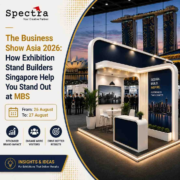
Business Show Asia 2026 exhibition stand design at Marina Bay Sands

The Business Show Asia 2026: How Exhibition Stand Builders Singapore Help You Stand Out at MBS

The Business Show Asia 2026 runs 26 to 27 August at Marina Bay Sands – two days, one of the most commercially concentrated B2B floors in Southeast Asia, and an exhibitor list that already includes Google Singapore, Salesforce, Zoho, Xero, Monday.com, Deel, Boston Consulting Group, Singtel, and StarHub.

Standing out in that crowd isn’t a matter of showing up with something adequate. The brands that walk away from The Business Show Asia with real results are the ones who treated their stand as a commercial decision long before the show opened, and worked with exhibition stand builders Singapore professionals who understand the difference between a structure that looks good and one that actually generates leads.

What The Business Show Asia Actually Demands from a Booth

This isn’t a niche industry expo. The Business Show Asia draws SMEs, startups, investors, and business decision-makers across sectors – a broad, commercially active audience that moves fast and evaluates quickly. The exhibitors confirmed for 2026 include some of the most recognised B2B brands operating in the Asia-Pacific region. The floor will be busy, well-funded, and professionally presented.

An exhibition booth design that looks like a shell scheme with a pull-up banner doesn’t just underperform – it actively signals the wrong things about the brand behind it. At a show where Salesforce and Google are neighbouring exhibitors, the brands that haven’t invested in proper bespoke exhibition stand design are going to feel that gap in the conversations they’re not having.

The Build Has to Do Commercial Work, Not Just Look Good

The most common mistake at business-focused shows is treating the booth as a backdrop rather than a commercial tool. The layout, the messaging hierarchy, the conversation flow – these aren’t design preferences; they’re decisions that determine how many qualified interactions happen across two days.

A well-briefed exhibition booth designer asks different questions at the start of a project: Who is the target visitor? What does a successful interaction look like? Where should the product demo sit? How many people should the booth handle at peak capacity without becoming chaotic? How does a visitor move from curiosity to conversation without feeling pressured?

The answers to these questions shape the exhibition booth designs that actually convert on the floor – not just the ones that photograph well in the post-show recap.

MBS Venue Compliance Is Not Optional

Marina Bay Sands has some of the strictest exhibition venue regulations in Singapore – height limits, fire safety certifications, electrical load requirements, build window constraints, and rigging approvals that vary depending on the hall and the floor area. A stand built without accounting for these requirements gets modified or pulled before the show opens.

Exhibition stand builders brands use for MBS builds need to have existing relationships with the venue operations team, established knowledge of the specific hall requirements, and a compliance management process built into the project timeline rather than bolted on at the end.

Spectra Creatives has been delivering exhibition builds at major Singapore venues since 2008 – with on-ground partners across the city and a Germany-based office supporting international clients exhibiting in Asia. Every project includes full compliance management as a standard part of the scope, not an afterthought.

Event Fabrication in Singapore: What the Timeline Actually Looks Like

The Business Show Asia runs 26 to 27 August. For event fabrication Singapore projects at MBS, a realistic timeline from confirmed brief to completed fabrication runs ten to fourteen weeks, depending on complexity – which means the window for getting a brief confirmed and a design process started is already running.

Brands that start the brief in July are working against a compressed timeline that limits design iterations, material choices, and the ability to catch and correct compliance issues before fabrication begins. Brands that confirm earlier get better results at the same budget.

The exhibitor list for The Business Show Asia 2026 is live at asiabusinessshow.com – the competitive landscape on that floor is already visible, and the brands that treat their booth as a commercial decision rather than a logistics one are already moving.

Ready to Brief the Build?

Spectra Creatives works with exhibitors attending The Business Show Asia and the broader Singapore exhibition calendar – delivering bespoke exhibition stand design and full fabrication from concept through to post-show breakdown.

2000+ completed projects. 16+ years of international exhibition experience. Clients including HP, Tata, Panasonic, and Biocon. Single point of contact from design to installation.
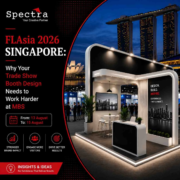
FLAsia 2026 Singapore

FLAsia 2026 Singapore: Why Your Trade Show Booth Design Needs to Work Harder at MBS

FLAsia 2026 runs from 13 to 15 August at Marina Bay Sands Expo and Convention Centre, Hall A & B – one of the most commercially competitive event venues in Southeast Asia. Franchising and licensing brands from across the region will be on that floor, all competing for the attention of buyers, investors, and potential franchise partners who have walked past hundreds of booths before they reach yours.

In that environment, trade show booth design Singapore decisions aren’t aesthetic preferences. They’re commercial ones. The booth that draws the right people in and gives them a reason to stay long enough for a real conversation is the booth that earns a return on the floor space investment. The one that blends into the background does not.

What FLAsia Exhibitors Are Actually Competing For

FLAsia is a franchise and licensing show. The visitors walking Hall A and B at MBS aren’t casual browsers – they’re evaluating brands, comparing opportunities, and making decisions that involve significant capital commitments. The standard of exhibitors present at this show is high, and the audience is experienced enough to separate a brand that looks credible from one that just turned up.

A booth at FLAsia 2026 is functioning as a proof point for the brand behind it. If the stand looks underfunded, rushed, or generic, it raises questions about the business itself that no conversation can fully undo. If it looks considered, professional, and aligned with the brand’s identity, it answers the credibility question before anyone opens their mouth.

What Strong Exhibition Booth Designs Actually Do at This Show

The best exhibition booth designs at a franchise and licensing show serve a specific commercial purpose – generating qualified conversations, not just foot traffic. That means the layout, the messaging hierarchy, and the visitor flow all need to be engineered around what happens inside the booth, not just what draws people in from the aisle.

A few things that make a measurable difference at FLAsia specifically:

Clear brand communication from 10 metres away

Hall A and B at MBS is a large, well-lit space. An exhibitor who can’t communicate what they do from across the aisle is already losing the moment a visitor’s attention moves on to the next stand.

A layout that invites rather than blocks

Booths with a reception desk at the front or a closed-off entrance create friction at the exact moment when curiosity should be welcomed. Open, accessible layouts – with conversation areas visible from outside the booth – perform better at franchise shows where the initial conversation is the whole point.

Meeting space without isolation

When people talk about a franchise, it usually needs some privacy, but if a booth just disappears completely into meeting rooms, then it also loses that visibility, which is the whole reason new visitors stop by, while the conversations are going on. So it is that tricky balance between open brand presence and private meeting capability, and honestly it is a design problem worth tackling right at the brief stage, not once you’re already building.

Why Exhibition Stand Builders Singapore Brands Use Matter Here

MBS has its own set of venue regulations – build windows, height restrictions, rigging approvals, and fire safety requirements that apply to every stand in the hall. Exhibition stand builders Singapore exhibitors rely on knowing these before fabrication begins, not to discover them on build day.

Beyond compliance, the logistics of building at MBS require on-ground coordination that only comes from experience. Lead times, materials sourcing, installation crew availability during the August show window, and the post-show breakdown schedule all need to be managed proactively.

Spectra Creatives has been delivering trade show booth design Singapore and broader Asia-Pacific exhibition builds since 2008, with an established network of on-ground partners across Singapore and completed projects at major MBS events. The process covers everything from design brief to post-show breakdown, with a single point of contact managing the full project rather than handing off between teams.

The Exhibitor List Is Already Live

FLAsia 2026 exhibitor profiles are available at franchiselicenseasia.com, which means the competitive landscape on that floor is already visible. Brands that get their exhibition design booth brief confirmed early have more design iterations, more time to resolve compliance questions, and more control over the finished result than those who start the process in July.

August 13 is closer than it looks from a fabrication timeline perspective. A build that needs to be in Hall A and B by the setup window requires a confirmed brief significantly earlier than most exhibitors expect.

Ready to Brief the FLAsia 2026 Build?

Spectra Creatives works with franchise and licensing brands, exhibition design company Singapore clients, and international exhibitors planning their first Asia-Pacific show – delivering best exhibition stand design outcomes from concept through to completed installation.

Best Exhibition Stand Design

How to Achieve the Best Exhibition Stand Design for Your Next Trade Show

Most exhibitors approach a trade show with a clear commercial objective – generate leads, launch a product, conduct open conversations with buyers in a new market. The stand is supposed to make all of that easier. However, achieving the best exhibition stand design requires careful planning. Many exhibitors rush the design process, submit the brief too late, and end up with a booth that looks better in the render than on the show floor.

Achieving the best exhibition stand design for a specific show isn’t about spending the most money. It’s about making the right decisions at the right stage of the process. Here’s what that actually looks like.

Start With the Brief, Not the Visuals

The single biggest factor in how a stand performs at a show has nothing to do with aesthetics -it’s how clearly the brief was written. An exhibition stand designer working from a detailed, strategic brief produces something fundamentally different from one working from “we want it to look modern and premium.”

A useful brief covers:

  • What products or services are being featured, and which ones are the priority
  • What kind of conversations the sales team needs to have – demos, private meetings, quick product introductions
  • How many visitors the space needs to handle comfortably at peak times
  • What the venue space looks like – dimensions, neighbouring stands, foot traffic direction
  • What success looks like at the end of day two

When your team answers these questions before design begins, the layout, materials, and visitor flow naturally fall into place. When they’re not, the design process fills in the gaps with assumptions that don’t always match what happens on the actual show floor.

Understand What Bespoke Actually Means

Many companies use the term “bespoke exhibition stand design” loosely in the industry. Some companies use it to mean “we’ll put your logo on our standard modular system.” Real bespoke design means the stand was conceived around the specific brief, the specific venue, and the specific commercial objectives of the exhibitor – not adapted from a template.

The difference shows in how the space functions. A genuinely bespoke exhibition stand design and build accounts for which side of the booth will see the most footfall and positions the key messaging accordingly. It designs the conversation flow – where visitors enter, where they naturally move, where the product demos sit, where private meetings happen – as part of the structure itself rather than leaving it to the sales team to figure out on the day.

This takes more time at the design stage. It also produces measurably better results on the floor, because the stand is working as hard as the people inside it.

Give the Process Enough Time

Submitting the brief late reduces the quality of the exhibition stand. Fabrication has a timeline that can’t be significantly compressed without cutting corners – manufacturers source materials, produce components, print and install graphics, assemble the structure, and inspect everything before delivering it to the exhibition venue.

For most custom builds, a realistic timeline from confirmed brief to completed fabrication is ten to sixteen weeks depending on complexity. Exhibitors who start that process with six weeks to go are already working with a compressed brief, limited design iterations, and less room to catch problems before they become expensive.

Teams consistently achieve the best exhibition stand design outcomes when they confirm the brief early and give the design process enough time to develop.

Think Beyond the Visual

A stand can look exceptional and still underperform commercially if the fundamentals aren’t right. Lighting that creates atmosphere but makes product demos hard to see. A layout that looks open in a render but creates bottlenecks when thirty people are inside. A graphic hierarchy that prioritises the brand name over the product benefit – the thing the visitor actually came to understand.

The best exhibition stand design always caters to experience first and structure second. What does a visitor see from ten metres away? What do they understand when they’re standing at the entrance? What do they do next, and where does that lead? These questions should have clear answers before fabrication begins, not on setup day.

What to Look for in a Stand Design Partner

Choosing the right exhibition stand designer matters more than most exhibitors realise when they go for their first custom build. The questions worth asking:

  • Do they cut dry or design around the actual floor conditions?
  • Can they show completed builds, not just renders?
  • Do they handle compliance for the specific venues on the schedule?
  • Is there a single point of contact through design, fabrication, and installation?
  • Do they offer storage and refurbishment for subsequent shows?

A partner who answers yes to all of these is definitely worth hiring.

Spectra Creatives has been delivering bespoke exhibition stand design and builds across global markets since 2008 – with 2000+ completed projects, an established German office, and clients including HP, Tata, Panasonic, and Biocon.


custom exhibition stand

Custom Exhibition Stand: 5 Mistakes That Cost Exhibitors Leads

Exhibiting at a trade show is a significant investment – floor space, travel, staffing, logistics, and the stand itself. Most exhibitors spend months planning the commercial side of the show and far less time thinking critically about the booth that’s supposed to make it all work. The result is a custom exhibition stand that looks fine on the outside but quietly bleeds leads throughout the event.

These are the five mistakes that come up repeatedly, and what they actually cost.

1. Designing for Photos, Not for People

A stand that photographs beautifully but doesn’t work in practice is one of the most common and expensive mistakes in custom exhibition stand design. Dramatic lighting rigs, bold geometric structures, and striking visual concepts are all legitimate design tools, but when exhibitors prioritise dramatic visuals over visitor flow, conversation space, and practical staff positioning, the booth ends up serving the Instagram post rather than the sales conversation.

Before the team approves any concept, the question worth asking is: where does a visitor naturally go when they walk into this space? and what do they do when they get there? If that question doesn’t have a clear answer in the design, it’s a problem that won’t get solved on the show floor.

2. Briefing a Builder Without a Strategy

A custom exhibition stand builder needs more than dimensions and a logo file. The brief has to include what the stand is supposed to achieve – which products are being featured, what kind of conversations the sales team needs to have, how many visitors the space needs to handle at peak times, and what a successful interaction looks like from start to finish.

Builders who receive a vague brief build a vague stand. The result is often a well-fabricated structure that doesn’t actually support the commercial objectives it was supposed to serve. The design process should start with strategy, not with aesthetics.

3. Underestimating the Build Timeline

Custom build exhibition stands take time – design, approval rounds, fabrication, quality checking, logistics, and on-site installation all need to happen in sequence. Compressing that timeline doesn’t make the stand cheaper or faster to produce; it just shifts the risk from the planning stage to the build stage, where problems are harder and more expensive to fix.

The most common version of this mistake is finalising the brief too late. A brief confirmed six weeks before a major show gives a very different outcome to one confirmed sixteen weeks out. The rushed timeline forces the production team to create a stand quickly, and the poor results from the show floor often trace back to the planning failure that caused them.

4. Ignoring Venue Compliance Until It’s Too Late

Every major exhibition venue has its own set of regulations – height restrictions, fire safety certifications, material standards, electrical requirements, rigging approvals, and build window constraints. These aren’t optional or negotiable, and venue authorities modify or remove a non-compliant stand before the show opens.

This happens more often than exhibitors expect, and almost always because compliance was treated as something to check at the end rather than something to design around from the start. When exhibitors build a custom exhibition stand without considering the specific venue’s rulebook, they may need to rebuild the stand partially or completely at their own expense and under significant time pressure.

5. Treating the Stand as a One-Show Asset

Exhibitors who use a custom stand once and then scrap it increase their exhibition costs and reduce their return on investment. Most well-designed custom build exhibition stands can be reconfigured, updated, and redeployed across multiple shows – different floor sizes, different markets, different objectives – with relatively minor modifications.

The brands that get the best return from their exhibition investment treat the stand as a long-term asset from the briefing stage. That means designing with modularity in mind, choosing materials that travel well and hold up across multiple events, and working with a builder who offers storage, maintenance, and refurbishment as part of the ongoing relationship rather than just a one-off fabrication job.

Getting It Right From the Start

Most of these mistakes share a root cause – decisions made too late, with too little information, by people who weren’t involved in the right conversations early enough. A custom exhibition stand design process that starts with strategy, accounts for venue compliance, and treats the brief seriously from day one produces stands that don’t just look good – they convert.

Spectra Creatives has been delivering custom exhibition stands across global markets since 2008, with 2000+ completed projects and clients including HP, Tata, Panasonic, and Biocon. Every project starts with a proper brief – not a template.