Posts

IHGF 2026 Noida

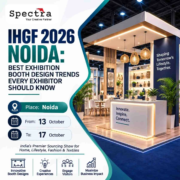
IHGF 2026 Noida: Best Exhibition Booth Design Trends Every Exhibitor Should Know

Handicrafts and home décor exhibitors gathering at IHGF 2026 face a different challenge than most trade show attendees. This isn’t a tech expo where a screen and a QR code do the talking – it’s a fair built entirely around craftsmanship, texture, and visual detail. Running from 13 to 17 October at India Expo Centre & Mart, Greater Noida, IHGF pulls in thousands of international buyers across sixteen product categories, from home furnishings to fashion accessories to eco-friendly goods. In a hall that dense, reliable exhibition booth designers have to build booths that have to earn a second look almost instantly.

Why Product-Led Fairs Need a Different Design Approach

Booths built for tech or industrial shows lean on branding and screens. IHGF works differently — buyers come to touch fabric, examine finishes, and compare craftsmanship up close. That changes what best exhibition stand design actually needs to accomplish here. Lighting has to flatter texture rather than wash it out, display shelving needs to let products breathe instead of crowding them together, and walkways need enough space for buyers to linger without blocking the aisle.

Design Trends Shaping This Year’s Fair

A few shifts are showing up across booths at fairs like IHGF this season:

  • Warmer, layered lighting that mimics natural light rather than harsh overhead fixtures
  • Modular shelving that can be rearranged quickly between product lines
  • Sustainable and reclaimed materials used in the booth build itself, echoing the eco-friendly categories many exhibitors show under
  • Smaller “vignette” style setups that recreate a room or lifestyle scene instead of flat product tables

These aren’t cosmetic choices. Buyers at IHGF are often sourcing for retail chains and export catalogs, and a booth that presents products the way they’d actually appear in a showroom tends to close conversations faster than one that just displays inventory.

What This Means for Booth Planning

Getting a booth ready for a five-day fair of this scale takes more lead time than exhibitors often expect. Exhibition booth designers working on IHGF stands typically need to account for:

  • Sourcing materials that photograph and display well under exhibition lighting
  • Building layouts that hold up across five full days of foot traffic, not just opening day
  • Planning storage and restocking space discreetly, without cluttering the display area

This is where a bespoke exhibition stand design and build approach earns its keep — a generic modular kit rarely does justice to handicraft and lifestyle brands that depend on visual storytelling to sell.

Choosing the Right Partner for IHGF

Spectra Creatives has built a reputation across India’s exhibition circuit for exactly this kind of work, with production facilities spread across the country and experience designing for fairs where product presentation carries as much weight as branding. For exhibitors weighing options for custom exhibition stand design at IHGF 2026, that kind of hands-on experience with product-heavy fairs matters more than a generic portfolio.

An exhibition design booth that photographs well, holds up over five days, and gives buyers a reason to stop walking is what separates a forgettable stall from one that actually drives orders. With IHGF just months away, now is the time to start planning it.

Farnborough International Airshow

Farnborough International Airshow 2026

Farnborough International Airshow is not a typical trade show. Every two years, the Farnborough International Exhibition and Conference Centre in Hampshire draws over 1,500 exhibitors from 48 countries and upwards of 80,000 attendees – aerospace manufacturers, defence contractors, airline executives, government procurement teams, and aviation technology leaders who make decisions worth billions on that floor over five days.

The brands showing at Farnborough aren’t there for general awareness. They’re there to close deals, sign contracts, and build relationships with some of the most commercially significant buyers in the global aerospace industry. In that context, exhibition stand design UK  professionals who understand the specific demands of aviation events aren’t a nice-to-have -they’re what separates a productive Farnborough presence from an expensive one.

What Makes Farnborough Different From Any Other Show

Most trade shows want to attract buyers. However, Farnborough attracts buyers who are already in the room to buy. The 2026 edition saw major exhibitors announced major aircraft orders, defence technology deals, and sustainable aviation partnerships directly from the show floor – the kind of transactions that require private meeting spaces, presentation capability, and brand environments that communicate credibility at a glance.

The competitive standard at Farnborough reflects this. Boeing, Airbus, Rolls-Royce, BAE Systems, Comac, Safran, and hundreds of tier-one aerospace suppliers bring fully engineered booth environments – not shell schemes dressed up with graphics. As a result, a brand that shows up with anything less than a purposefully designed stand is signalling something it almost certainly doesn’t intend to signal.

Exhibition booth designs at Farnborough need to handle multiple simultaneous functions: an open brand presence that visitors can easily see from the aisle, private meeting capability for deal discussions, product display or demonstration space, and enough flexibility in the layout that it doesn’t feel congested at peak times.

The Case for Bespoke at Farnborough

Generic modular systems can work well at many shows. However, Farnborough is one where bespoke exhibition stand design and build consistently delivers better results, and the reason is specific to how this show works.

Aerospace and defence exhibitors at Farnborough are competing for the attention of visitors who have spent years building relationships on this floor. They recognise quality immediately, and they make inferences about a brand’s operational standards from how the booth is presented. A stand that looks considered – custom-fabricated, properly lit, with a layout built around the right visitor experience – answers the credibility question that a standard modular unit leaves open.

Bespoke exhibition stands London and UK-based fabrication also carry a practical advantage at a show this size: proximity. Shorter logistics chains, faster resolution of last-minute adjustments, and on-ground teams familiar with Farnborough’s venue regulations and build window constraints all reduce the operational risk that comes with a complex exhibition at a high-stakes event.

What UK Exhibition Venues Require From Builders

Farnborough has its own set of venue regulations that govern how stands are built, what materials can be used, how electrical systems are specified, and what structural certifications are required for two-storey builds. These aren’t negotiable – non-compliant stands get modified or refused before the show opens.

The best exhibition stand design UK operations handle this as a standard part of the process. Compliance documentation, structural engineering sign-off for elevated builds, fire certification, and venue liaison are built into the project timeline rather than treated as a post-fabrication checklist.

Additionally, for international exhibitors bringing a stand into the UK for Farnborough – a common scenario given the show’s global draw – there’s the additional layer of import documentation, customs coordination, and on-ground logistics that requires established UK relationships to manage smoothly.

Private Meeting Space Is Not Optional at This Show

The nature of Farnborough means conversations happen that don’t belong on an open show floor. A procurement discussion, a partnership negotiation, a defence contract briefing – these require privacy, and a booth layout that doesn’t accommodate these forces exhibitors to either have sensitive conversations in public or lose the conversation to a competitor’s hospitality suite.

The best exhibition stand design outcomes at Farnborough include integrated meeting rooms that maintain the brand environment while providing genuine privacy – not a curtained-off corner, but a properly specified private space built into the structure from the design stage.

Planning for the Next Edition

Farnborough runs biennially, which means the next edition is 2028. Brands that perform well at Farnborough consistently start the design and build process earlier than most, treating the two-year gap as planning time rather than breathing room.

Spectra Creatives delivers exhibition booth designers expertise and full bespoke fabrication for UK and European aviation and defence shows – with a Germany-based office, 16+ years of international exhibition experience, and 2000+ completed projects across global trade events.

Best Exhibition Stand Design

How to Achieve the Best Exhibition Stand Design for Your Next Trade Show

Most exhibitors approach a trade show with a clear commercial objective – generate leads, launch a product, conduct open conversations with buyers in a new market. The stand is supposed to make all of that easier. However, achieving the best exhibition stand design requires careful planning. Many exhibitors rush the design process, submit the brief too late, and end up with a booth that looks better in the render than on the show floor.

Achieving the best exhibition stand design for a specific show isn’t about spending the most money. It’s about making the right decisions at the right stage of the process. Here’s what that actually looks like.

Start With the Brief, Not the Visuals

The single biggest factor in how a stand performs at a show has nothing to do with aesthetics -it’s how clearly the brief was written. An exhibition stand designer working from a detailed, strategic brief produces something fundamentally different from one working from “we want it to look modern and premium.”

A useful brief covers:

  • What products or services are being featured, and which ones are the priority
  • What kind of conversations the sales team needs to have – demos, private meetings, quick product introductions
  • How many visitors the space needs to handle comfortably at peak times
  • What the venue space looks like – dimensions, neighbouring stands, foot traffic direction
  • What success looks like at the end of day two

When your team answers these questions before design begins, the layout, materials, and visitor flow naturally fall into place. When they’re not, the design process fills in the gaps with assumptions that don’t always match what happens on the actual show floor.

Understand What Bespoke Actually Means

Many companies use the term “bespoke exhibition stand design” loosely in the industry. Some companies use it to mean “we’ll put your logo on our standard modular system.” Real bespoke design means the stand was conceived around the specific brief, the specific venue, and the specific commercial objectives of the exhibitor – not adapted from a template.

The difference shows in how the space functions. A genuinely bespoke exhibition stand design and build accounts for which side of the booth will see the most footfall and positions the key messaging accordingly. It designs the conversation flow – where visitors enter, where they naturally move, where the product demos sit, where private meetings happen – as part of the structure itself rather than leaving it to the sales team to figure out on the day.

This takes more time at the design stage. It also produces measurably better results on the floor, because the stand is working as hard as the people inside it.

Give the Process Enough Time

Submitting the brief late reduces the quality of the exhibition stand. Fabrication has a timeline that can’t be significantly compressed without cutting corners – manufacturers source materials, produce components, print and install graphics, assemble the structure, and inspect everything before delivering it to the exhibition venue.

For most custom builds, a realistic timeline from confirmed brief to completed fabrication is ten to sixteen weeks depending on complexity. Exhibitors who start that process with six weeks to go are already working with a compressed brief, limited design iterations, and less room to catch problems before they become expensive.

Teams consistently achieve the best exhibition stand design outcomes when they confirm the brief early and give the design process enough time to develop.

Think Beyond the Visual

A stand can look exceptional and still underperform commercially if the fundamentals aren’t right. Lighting that creates atmosphere but makes product demos hard to see. A layout that looks open in a render but creates bottlenecks when thirty people are inside. A graphic hierarchy that prioritises the brand name over the product benefit – the thing the visitor actually came to understand.

The best exhibition stand design always caters to experience first and structure second. What does a visitor see from ten metres away? What do they understand when they’re standing at the entrance? What do they do next, and where does that lead? These questions should have clear answers before fabrication begins, not on setup day.

What to Look for in a Stand Design Partner

Choosing the right exhibition stand designer matters more than most exhibitors realise when they go for their first custom build. The questions worth asking:

  • Do they cut dry or design around the actual floor conditions?
  • Can they show completed builds, not just renders?
  • Do they handle compliance for the specific venues on the schedule?
  • Is there a single point of contact through design, fabrication, and installation?
  • Do they offer storage and refurbishment for subsequent shows?

A partner who answers yes to all of these is definitely worth hiring.

Spectra Creatives has been delivering bespoke exhibition stand design and builds across global markets since 2008 – with 2000+ completed projects, an established German office, and clients including HP, Tata, Panasonic, and Biocon.