
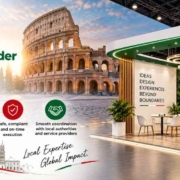
How an Experienced Exhibition Stand Builder in Italy Handles Venue Complexity
Italy’s exhibition venues aren’t built to a single standard, and finding an exhibition stand builder that understands this and designs your stand accordingly is indispensable. An experienced stand builder in Italy successfully manages the venue complexity by combining local regulatory mastery and structural engineering for major exhibition centers like Fiera Milano and Fiera di Bologna. As each venue has different rules considering building regulations or loading schedules, working with experienced exhibition stand builders in Italy can save your brand from a lot of complexities and make the event a highly successful one.
Why Venue Complexity Catches So Many Exhibitors Off Guard
A design that worked perfectly at one venue doesn’t automatically transfer to another. Height limits, floor load limits, fire safety regulations, and even simple things like the accessibility of electricity can differ quite a lot between exhibition centers in Italy. Teams that are not knowledgeable about the specific features of a certain venue usually look at the restrictions during the move-in, when it is already too late to change things.
A few specific complexities that come up repeatedly across major Italian venues:
- Height restrictions that differ by hall, sometimes even by section within the same hall
- Loading dock schedules that are tightly booked across hundreds of exhibitors building simultaneously
- Local fire safety and material certification requirements that aren’t always obvious from a venue’s general exhibitor manual
- Power and utility access points fixed in specific locations, which can force layout compromises if not planned for early
None of these are unusual by themselves. The problem is when they surface late, forcing last-minute redesigns under serious time pressure.
What Genuine Venue Experience Actually Looks Like
There is a huge difference between a company that works at a venue for the first time and one that works at that venue for multiple shows. When a company has worked at a venue repeatedly, it knows precisely which loading docks will be busy at peak hours, which halls have low ceilings, and which suppliers can get the materials into the venue quickly if adjustments are needed.
An established stand builder in Italy typically brings this kind of accumulated knowledge into the design phase itself, rather than discovering constraints during installation. Planning around known venue quirks from day one instead of reacting to them on-site is really what separates a smooth build from a stressful one.
Designing Around Constraints Without Compromising the Concept
A skilled team doesn’t just accept venue limitations passively. Good exhibition stall design Italy treats constraints as part of the creative brief rather than an obstacle to work around apologetically. A low ceiling section might become an intentional design feature rather than a compromise. A fixed power point location might shape furniture layout in a way that actually improves visitor flow rather than hindering it.
A few things worth checking with any stand builder before committing:
- Can they show past builds at the specific venue your show is running at?
- Do they handle both design and on-site fabrication, or subcontract installation to a separate crew?
- What’s their process when an unexpected venue constraint surfaces mid-build?
Companies that can answer these clearly, with specific examples rather than vague reassurances, tend to be the ones genuinely equipped for Italy’s more complex venues.
Local Logistics Make a Bigger Difference Than People Expect
Hiring a team that has local experience and contacts offers significant benefits in shipping materials, customs coordination for import shipments into Italy, and on-site labor management. The contribution of local exhibition stand builders in Italy, who already have solid contacts in a venue’s ecosystem, makes the process smoother by eliminating potential obstacles connected with remote interaction, such as the wrong measurements and delays in the delivery of materials, as well as installation teams not aware of a brand-new venue’s access requirements.
Spectra Creatives works with exhibitors preparing for shows across Italy’s major venues, bringing venue-specific experience into the design process itself rather than treating logistics as a separate problem to solve after the concept is finalised.
Handling the Unexpected During Installation Week
Even with the best planning, something unexpected can come up during the live installation process. It can be anything from a delivery delay to a last-minute venue requirement. What separates an experienced team is whether they have the local relationships and on-the-ground flexibility to solve these problems quickly. They should be transparent in communication so that even if they are working remotely, they can do installation seamlessly.
Choosing the Right Partner
Venue complexity isn’t something exhibitors should have to solve alone, and it’s not something a design-only firm without on-the-ground fabrication experience can fully anticipate either. Spectra Creatives combines design and build under one process specifically to close that gap, ensuring venue-specific knowledge shapes the stand from concept through to the final install.
FAQs
Do exhibition venue rules really vary that much across Italy?
Yes. When we go from one venue to another, they differ significantly in aspects like height restrictions, fire codes, and loading schedules. So, the exhibition builder you choose should have extensive experience across these major venues.
What’s the risk of using a design-only firm without local fabrication experience?
They may not anticipate venue-specific constraints, leading to costly last-minute redesigns during installation.
How early should I confirm my exhibition stand builder for a major Italian show?
Ideally, 10-12 weeks ahead, allowing time for design, venue coordination, and fabrication scheduling.

 Germany: