
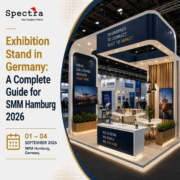
Exhibition Stand in Germany: A Complete Guide for SMM Hamburg 2026
SMM Hamburg is the world’s leading maritime trade fair. When it opens on 1 September 2026 at Hamburg Messe und Congress, it will draw 2,200+ exhibitors and over 48,000 visitors from more than 100 countries – shipbuilders, shipowners, naval architects, marine technology providers, port authorities, classification societies, and defence contractors who gather every two years in Hamburg to do serious business.
The 2026 theme is “driving the maritime transition” – decarbonisation, sustainable shipping, and energy-efficient ship technologies sit at the centre of the programme. That context shapes not just what’s being shown on the floor but what the audience expects from the brands showing it. For anyone planning an exhibition stand in Germany for SMM, the considerations start well before the build and go far beyond the visual design.
Understanding the SMM Floor Before the Brief Is Written
Hamburg Messe is one of the most professionally demanding exhibition venues in Europe. The halls are large, the exhibitor standard is consistently high, and the audience – buyers and decision-makers from across the global maritime supply chain – moves through the floor with specific objectives. Wärtsilä, SCHOTTEL, VULKAN Group, and most of the major names in marine engineering and propulsion have exhibited here for decades. Their booth presence reflects the commercial weight they bring to the show.
For any brand entering this environment, the exhibition booth design has to do more than look professional – it has to communicate technical credibility, product capability, and brand authority to an audience that knows the industry inside out and can spot a poorly considered stand from across the aisle.
Hamburg Messe: What German Exhibition Regulations Actually Require
German exhibition venues operate under strict technical regulations, and Hamburg Messe is no exception. Structural requirements for two-storey stands, DIN-compliant electrical installations, fire safety certification, aisle width regulations, material standards, and build and breakdown window constraints are all enforced – not suggested.
The process of producing a compliant exhibition stand in Germany requires engagement with these regulations from the design stage, not after the fact. Structural drawings need to be approved before fabrication begins. Electrical specifications need to meet German standards. Height and overhang restrictions vary by hall and need to be confirmed against the specific floor plan allocation before the concept is finalised.
An exhibition booth designer working in this market regularly will have existing relationships with Hamburg Messe’s technical team and a compliance process already built into their project workflow. One who doesn’t will discover the requirements on build day – which is a bad time to discover anything.
The Maritime Transition Theme Changes What Booths Need to Show
SMM 2026’s focus on decarbonisation and sustainable shipping isn’t just a conference theme -it’s what the audience is actively evaluating on the floor. Shipowners and operators attending SMM in 2026 are looking at alternative fuels, energy efficiency technologies, emissions monitoring systems, and digital fleet management solutions. Brands in these spaces need exhibition booth designs that reflect the innovation behind what they’re showing, not just a table of printed datasheets.
That means technology integration – interactive product demonstrations, data visualisation displays, digital twin presentations – needs to be built into the stand concept from the brief rather than added as an afterthought. The best exhibition stand design outcomes at technically sophisticated shows like SMM come from treating the booth as a product demonstration environment, not just a branded backdrop.
Bespoke vs Modular at SMM Hamburg
The choice between bespoke exhibition stand design and a modular system at SMM depends on what the brand needs to achieve on that specific floor. For brands making their first appearance at SMM with a limited product range and a modest floor allocation, a well-designed modular system can deliver a credible result without the investment of a full custom build.
For brands with larger floor allocations, complex product demonstrations, or private meeting requirements – all common at SMM – bespoke exhibition stand design consistently outperforms modular systems in how it handles these needs simultaneously. A custom build can be engineered around the specific technical and commercial objectives of the exhibitor rather than adapted from a standard configuration that wasn’t designed with those objectives in mind.
Starting Early Is Not Optional at This Show
SMM is a biennial event. The brands that perform consistently well here treat the two-year cycle as a planning window, not breathing room. For new exhibitors or those significantly upgrading their presence, a timeline of ten to sixteen weeks from confirmed brief to completed fabrication is realistic – which means September 2026 decisions need to be made now, and 2028 planning conversations should start well before 2027.
Spectra Creatives has been delivering exhibition stands across Germany and European maritime shows since 2008, with an established office in Germany, on-ground venue relationships across Hamburg Messe, and a client list that includes some of the most recognised names in industrial and technology exhibition.

 Germany: