
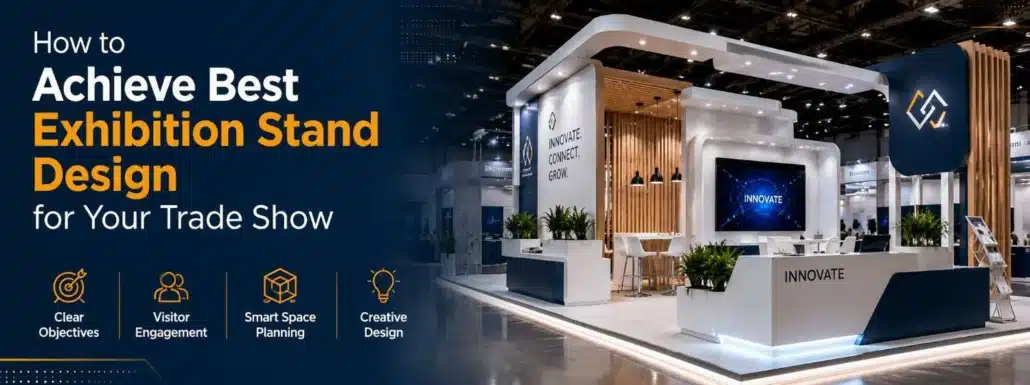
How to Achieve the Best Exhibition Stand Design for Your Next Trade Show
Most exhibitors approach a trade show with a clear commercial objective – generate leads, launch a product, conduct open conversations with buyers in a new market. The stand is supposed to make all of that easier. However, achieving the best exhibition stand design requires careful planning. Many exhibitors rush the design process, submit the brief too late, and end up with a booth that looks better in the render than on the show floor.
Achieving the best exhibition stand design for a specific show isn’t about spending the most money. It’s about making the right decisions at the right stage of the process. Here’s what that actually looks like.
Start With the Brief, Not the Visuals
The single biggest factor in how a stand performs at a show has nothing to do with aesthetics -it’s how clearly the brief was written. An exhibition stand designer working from a detailed, strategic brief produces something fundamentally different from one working from “we want it to look modern and premium.”
A useful brief covers:
- What products or services are being featured, and which ones are the priority
- What kind of conversations the sales team needs to have – demos, private meetings, quick product introductions
- How many visitors the space needs to handle comfortably at peak times
- What the venue space looks like – dimensions, neighbouring stands, foot traffic direction
- What success looks like at the end of day two
When your team answers these questions before design begins, the layout, materials, and visitor flow naturally fall into place. When they’re not, the design process fills in the gaps with assumptions that don’t always match what happens on the actual show floor.
Understand What Bespoke Actually Means
Many companies use the term “bespoke exhibition stand design” loosely in the industry. Some companies use it to mean “we’ll put your logo on our standard modular system.” Real bespoke design means the stand was conceived around the specific brief, the specific venue, and the specific commercial objectives of the exhibitor – not adapted from a template.
The difference shows in how the space functions. A genuinely bespoke exhibition stand design and build accounts for which side of the booth will see the most footfall and positions the key messaging accordingly. It designs the conversation flow – where visitors enter, where they naturally move, where the product demos sit, where private meetings happen – as part of the structure itself rather than leaving it to the sales team to figure out on the day.
This takes more time at the design stage. It also produces measurably better results on the floor, because the stand is working as hard as the people inside it.
Give the Process Enough Time
Submitting the brief late reduces the quality of the exhibition stand. Fabrication has a timeline that can’t be significantly compressed without cutting corners – manufacturers source materials, produce components, print and install graphics, assemble the structure, and inspect everything before delivering it to the exhibition venue.
For most custom builds, a realistic timeline from confirmed brief to completed fabrication is ten to sixteen weeks depending on complexity. Exhibitors who start that process with six weeks to go are already working with a compressed brief, limited design iterations, and less room to catch problems before they become expensive.
Teams consistently achieve the best exhibition stand design outcomes when they confirm the brief early and give the design process enough time to develop.
Think Beyond the Visual
A stand can look exceptional and still underperform commercially if the fundamentals aren’t right. Lighting that creates atmosphere but makes product demos hard to see. A layout that looks open in a render but creates bottlenecks when thirty people are inside. A graphic hierarchy that prioritises the brand name over the product benefit – the thing the visitor actually came to understand.
The best exhibition stand design always caters to experience first and structure second. What does a visitor see from ten metres away? What do they understand when they’re standing at the entrance? What do they do next, and where does that lead? These questions should have clear answers before fabrication begins, not on setup day.
What to Look for in a Stand Design Partner
Choosing the right exhibition stand designer matters more than most exhibitors realise when they go for their first custom build. The questions worth asking:
- Do they cut dry or design around the actual floor conditions?
- Can they show completed builds, not just renders?
- Do they handle compliance for the specific venues on the schedule?
- Is there a single point of contact through design, fabrication, and installation?
- Do they offer storage and refurbishment for subsequent shows?
A partner who answers yes to all of these is definitely worth hiring.
Spectra Creatives has been delivering bespoke exhibition stand design and builds across global markets since 2008 – with 2000+ completed projects, an established German office, and clients including HP, Tata, Panasonic, and Biocon.



 Germany:
