Custom Exhibition Stand

How to Plan a Custom Exhibition Stand: Design, Cost & Tips

“Custom” is one of those words that gets attached to everything – custom suits, custom cars, custom playlists. Most of the time it just means “made for you.” But in the exhibition world, that word carries a lot more weight. A custom exhibition stand isn’t a rental booth with your logo stuck on – it’s a structure engineered from scratch around your brand, your product, and how you want visitors to experience your space. At Spectra Creatives, we’ve been building these stands for brands across 7+ countries since 2008, so this guide walks through what actually goes into one – design, cost, and the details that separate a forgettable booth from one people talk about after the show.

What Exactly Counts as “Custom” in case of exhibition stand?

A custom stand is built specifically for one exhibitor, using a layout, materials, and graphics chosen for that brand alone – nothing pulled from a shared modular inventory. It’s designed to solve a specific problem: how do you get someone to stop walking and actually engage?

People often confuse this with “bespoke,” but there’s a meaningful difference. A bespoke exhibition stand design usually means a completely original build with no reused structural elements at all – every piece engineered fresh. A custom stand, on the other hand, can combine unique design elements with tested structural systems, which keeps quality high without inflating cost or build time unnecessarily. Both routes deliver a stand that actually looks like your brand rather than a hired shell.

What Makes a Custom Build Worth It?

The value isn’t just aesthetic – it shows up in how the space actually performs on the floor:

  • Layout built around your specific traffic patterns and product story
  • Room for demo areas, private meeting corners, or media walls
  • Two-storey or mezzanine construction where floor space is tight and visibility matters
  • Materials solid enough to be reused across multiple shows
  • Better footfall, which directly improves lead quality and follow-up conversations

Who Actually Needs One?

Not every exhibitor needs a fully custom build, but certain situations make it worth the investment. Brands launching a new product often want the entire stand designed around that single reveal moment. Established companies use custom builds to reinforce a consistent identity across shows in different countries – something we handle regularly for clients exhibiting across Europe, the Middle East, and Asia Pacific. Smaller or newer brands, meanwhile, often get the most dramatic return, since a well-designed stand lets them compete visually with much bigger players on the same floor.

Designing the Stand: Where the Real Work Happens

Good custom exhibition stand design starts before any sketching does – with the venue itself. Hall dimensions, entry points, and expected foot traffic all shape early decisions, which is why our design teams typically study the floor plan before proposing layouts.

From there, it’s about balance, contrast, and focus. Balance keeps a stand from feeling cluttered even when it’s packed with features. Contrast – through lighting, colour, or material texture – pulls the eye toward key zones like product displays or demo counters. Focus means picking one clear message and building the whole space to support it, rather than trying to say everything at once. Branding needs to sit naturally within this – logo placement, colour palette, and signage that reinforces identity without overwhelming the visitor.

A team offering full custom exhibition stand design and build under one roof – design, fabrication, and on-site installation – avoids the handoff gaps that often show up when these stages are managed by separate vendors.

Before the show itself, a few checks tend to save the most stress:

  • Walk the finished stand fully to catch graphic or signage inconsistencies
  • Test every screen, light, and tech integration ahead of time
  • Brief on-ground staff on product details and visitor flow
  • Confirm dismantling and storage logistics in advance, not on the last day

What Does It Cost?

Pricing swings a lot from project to project, and honestly, it should – a single-storey stand with a simple layout isn’t in the same league as a mezzanine build carrying AV screens and custom joinery. As a rough guide, compact stands stay closer to the lower end of the budget. Once you start adding bespoke fixtures, multimedia touches, or a second level, costs climb into the mid and higher brackets pretty quickly. But fixating on the final number misses the point a bit. What really matters is what that stand brings back – the leads it generates, the conversations it sparks, and whether people still remember your brand walking out of the hall.

Yes, custom built exhibition stands ask for more money upfront than a modular rental would. But run the numbers over two or three shows, and the gap starts closing fast – a well-built stand doesn’t fall apart after one use, so you’re not paying for the same thing twice.

That’s more or less how we’ve built our track record – over 2000 booths delivered so far, for brands showing up across the USA, Europe, the Middle East, and Asia Pacific. We stay involved through the whole thing, from the first sketch to the final teardown after the show ends.

If you’re planning your next show and want a stand that actually pulls its weight, talk to Spectra Creatives – we’d love to help you build it.


exhibition stalls in Italy

Why Some Exhibition Stalls in Italy Look Impressive in Design but Fail to Attract Visitors

A stunning booth and a busy booth aren’t the same thing. Plenty of stands look incredible in a portfolio shot but sit quiet on the actual show floor, because they were designed for a camera angle, not for a crowd walking past at speed. We’ve watched this happen enough times at Spectra Creatives, on more than one exhibition stall design Italy build, that it stopped surprising us.

Design That Photographs Well vs Design That Works for exhibition stalls

There’s a gap between a stand that looks striking in a render and one that actually pulls people in. Renders are usually shot from one flattering angle, and that’s the version everyone falls in love with during the pitch. But a visitor walking the aisle doesn’t get that angle. They get three seconds, maybe less, to figure out what you do and why they should stop. If the layout doesn’t answer that fast, the crowd just keeps moving – and honestly, most of them won’t even remember the booth was there.

Why Do Visitors Walk Past Stunning Stalls?

Mostly hesitation, and a bit of crowd pressure. People behind them are moving too, so there’s rarely time to stop and puzzle something out. This is where an experienced stand builder in Italy earns their fee – not by adding more design flair, but by removing the guesswork. Clear signage, an obvious entry point, one strong message instead of five competing ones.

A Few Things That Quietly Hurt Footfall

Even expensive-looking stalls tend to repeat the same handful of mistakes:

  • Entrances that feel closed off, more like a private room than an invitation
  • Branding placed too high or too small to catch someone’s eye mid-walk
  • Staff bunched near the front, blocking the exact spot people would enter
  • Visuals so busy that the product or service gets lost in the noise
  • Nothing for a curious visitor to actually do – no scan, no sign-up, no takeaway

None of these are dramatic on their own. Stack two or three together, though, and the booth quietly becomes invisible.

What Actually Separates a Good Stand Builder in Italy From an Average One?

It’s not the boldness of the concept, honestly. The builders who consistently pull footfall tend to think like event planners first, designers second – they walk the hall layout before a single panel gets fabricated. That instinct is a lot of what makes a solid exhibition stall design Italy project work: less about novelty, more about knowing how a tired, distracted crowd actually moves over a three-day show.

Getting the Layout and Sightlines Right

Small changes usually beat a full redesign:

  • Angling the main display toward the busiest aisle rather than dead ahead
  • Leaving at least one sightline into the booth completely open
  • Setting the brand name at a walking visitor’s eye level, not a seated one
  • Letting lighting point people toward the product itself, not just the structure

Why Local Know-How Still Matters

Italy’s fair circuit is enormous. Fiera Milano hosts more than 30 major international trade shows a year, and foot traffic can swing wildly between halls, entrances, even the time of day. A generic layout doesn’t account for any of that. This is roughly the value exhibition stand builders in Italy bring to the table – they’ve stood in these exact halls before and already know which corners get skipped.

The Real Balance

The stalls that actually work treat looks and usability as one job, not two separate ones handed to different people. That’s the approach Spectra Creatives takes into every exhibition stall design Italy project – memorable enough to notice, planned carefully enough to actually be seen.

Want a stand that people notice and actually walk into? Get in touch with Spectra Creatives.

Exhibition Stand Contractors Birmingham

How to Compare Exhibition Stand Contractor Birmingham without Choosing on Price Alone?

Comparing exhibition stand contractor Birmingham on price alone is a mistake that shows up months later – usually the moment your stand arrives looking nothing like the render you signed off on. The smarter approach is weighing build quality, design flexibility, and after-show support alongside cost, not instead of it. Get that balance right and the stand pays for itself in the leads it generates.

What to Look for Beyond the Quote in an Exhibition Stand Contractor

A quote tells you almost nothing about how a contractor actually works. What matters more is process – how they handle changes, deadlines, and the inevitable last-minute request from your marketing team.

Before signing anything, it’s worth asking a few pointed questions:

  • Do they own their build materials or outsource fabrication to a third party?
  • How many revisions are included before the design is locked?
  • What happens if your shipment or on-site build hits a delay?
  • Can they show past exhibition booth designs for brands in your sector?

These questions expose the difference between a contractor who manages the full project and one who’s simply reselling someone else’s labour.

Why Portfolio Diversity Actually Tells You Something

A contractor’s past work says more than any sales pitch. Look for range – a team that’s only ever built one style of stand will likely push that same style onto your brand, regardless of what your audience actually responds to. Spectra Creatives, for instance, has worked across sectors from tech to hospitality, which shows up in how differently each build is approached rather than a repeated template stretched across every client.

NEC Birmingham alone runs upwards of 170 events a year, so contractors working this city regularly end up building for all sorts of hall sizes, footfall levels, and stand layouts – not the handful a firm tied to one regional venue would ever see. That kind of variety teaches you things no photo in a portfolio ever will.

How Do Design Capabilities Affect Your Stand’s Overall Impact?

This is where most budget-first decisions quietly fall apart. A contractor with strong in-house design capability will think about sightlines, lighting, and visitor flow – not just panels and a logo. Firms known for bespoke exhibition stands London clients rely on tend to bring that same structural thinking wherever they build, because the design discipline doesn’t change with the postcode.

Ask to see 3D renders before production starts, and ask how storage or reuse across future shows factors into the design. A stand that only works once is rarely good value, however cheap the initial build.

What About Support After the Stand Is Built?

The relationship shouldn’t end at installation. A dependable partner sticks around for:

  • On-site troubleshooting during the show itself
  • Storage between events
  • Refurbishment or resizing for your next booking
  • Transparent costs for reprints or panel swaps

This is often where lower-cost contractors quietly disappear, leaving you to sort out logistics solo.

Bringing the Comparison Together

Choosing between contractors ultimately comes down to trusting the process behind the price tag, not the number itself. A firm with strong exhibition stand design UK experience, proper design sign-off stages, and genuine after-show support will almost always outperform the cheapest option on the table – and outlast it too. Spectra Creatives approaches every brief this way, treating each stand as reusable brand infrastructure rather than a one-off expense, and it’s this mindset, more than any single quote, that separates the exhibition stand contractors in Birmingham worth shortlisting from the rest.

Ready to build a stand that works as hard as your brand does?

Get in touch with Spectra Creatives for a no-pressure design consultation.


Bespoke Exhibition Stand in Germany

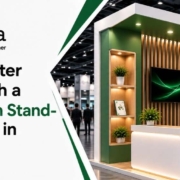
How to Make Better Use of Space with a Bespoke Exhibition Stand- Insight by Builder in Germany

Space efficiency starts with smart zoning, multi-level thinking, and furniture that earns its spot instead of sitting there for show. Even a modest 20 sqm plot can feel open and purposeful once it’s planned with intention rather than just filled to the edges. Here’s the mistake most exhibitors make without realising it – they pile in extra panels, extra shelves, extra everything, assuming more equals more value. It doesn’t. Nine times out of ten, it justa reads as clutter to someone walking past.

A well-designed exhibition stand in Germany works the opposite way- fewer distractions, clearer sightlines, and every metre earning its place. Most exhibitors only figure this out after their first cramped, easily-forgotten booth – a costly way to learn a fairly simple lesson.

What Makes Space for Bespoke Exhibition Stand Planning So Important at Trade Shows?

When you walk any hall at Messe Frankfurt or Messe Düsseldorf and you’ll notice how fast people judge a booth. Three seconds, maybe less, before someone decides whether to stop or keep moving. Germany hosts roughly two-thirds of the world’s leading trade fairs, so the competition for that split-second attention is genuinely tough. A cluttered layout gets ignored no matter how good the product is. This is exactly why a bespoke exhibition stand design matters so much here – it’s built to guide movement and put your message front and centre, not to just fill space.

How Do You Choose the Right Layout for Your Booth?

There’s no one “right” layout. It really depends on your goals, your product, and the space you have. Before choosing a floor plan, think about a few important things:

  • Map out where people will enter, pause, and exit
  • Set aside a semi-private corner for meetings or demos
  • Use vertical space – raised graphics, hanging structures – instead of relying only on the footprint
  • Keep walkways wide enough that visitors don’t feel boxed in

Get these basics right and the rest of an exhibition stand in Germany tends to fall into place without much fuss.

Bespoke Design and Every Square Metre

Modular kits off the shelf only stretch so far before they start looking like the stand two aisles over. That’s the trade-off nobody mentions upfront. A proper bespoke exhibition stand design flips that – storage tucked exactly where your team needs it, lighting angled to one hero product instead of flattening the whole space, furniture cut to fit that awkward corner plot rather than wasted around it. None of this is about looking pricier for the sake of it. It’s about the layout actually holding up once your team is standing in it for eight hours straight, talking to visitors, not just looking good in a render.

Why Work with Local Builders Instead of Importing a Stand?

This one surprises a lot of first-time exhibitors. Shipping a stand from abroad sounds simpler on paper, but rarely is in practice. Working with stand builders in Germany usually means:

  • No cross-border freight delays holding up your build-up
  • On-site fixes during setup instead of waiting days for replacement parts
  • Local knowledge of venue rules, load-in windows, and hall quirks

That local familiarity alone tends to save a genuinely stressful week.

Multi-Level and Modular Solutions That Save Space

If budget allows, double-decker structures are worth a serious look. A second level for meetings or storage effectively doubles your usable footprint without expanding the ground plan – a favourite move for anyone working with a tight lot at an exhibition stand in Germany. Modular elements also mean the same build can be reworked for the next fair rather than scrapped and rebuilt from zero.

Conclusion

Space efficiency isn’t an afterthought – it’s the foundation of a stand that actually works for your team and your visitors. Seasoned exhibition stand builders in Frankfurt know how to read a hall plan before the first panel even goes up, and that experience shows in the final result.

Ready to rethink your next stand? Talk to Spectra Creatives today.


OS+H Asia 2026

OS+H Asia 2026: Turning Your Exhibition Space into a Brand Experience

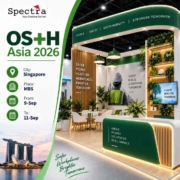
OS+H Asia 2026 will be the 15th International Occupational Safety and Health Exhibition for Asia, where thousands of safety practitioners and business leaders will focus on the future of safe working. In such a tight competition, your exhibition booth should be such that it immediately captures the attention of the visitors and is remembered by delegates. Spectra Creatives is a global leader in exhibition booth design and fabrication with a solid footprint in Singapore and the broader Asia-Pacific market, helping you design stands that gives high brand experiences.

A Show That’s Grown Into Something Bigger

This year marks the 15th edition of the Occupational Safety + Health Exhibition for Asia, running 9 to 11 September 2026 at Marina Bay Sands. It’s been a Singapore fixture since 1998, powered by A+A, which is Germany’s flagship trade fair for workplace safety, security, and health. The 2026 edition has grown its floor space by over 21% since the last outing, now hosting 130 exhibitors from 17 countries. The bigger story, though, is what’s actually on display this year: exoskeletons, AI-driven safety monitoring, robotics, drone inspection, immersive VR training modules, and smart PPE. A dedicated Exo PARK, run alongside the Fraunhofer IPA team, is expected to be one of the biggest draws on the floor.

What That Means for How You Should Be Exhibiting

If your product ranges from wearable tech to VR and robotics-assisted safety gear, you need an exhibition stand that can help your guests try these. Visitors here want to put an exoskeleton on. They want to try the VR headset. A demo isn’t a nice-to-have at this show; it’s often the entire reason someone stops walking.

A few practical things worth building into the stand itself:

  • Space cleared specifically for hands-on trials, not squeezed in as an afterthought around a display counter
  • Certification and safety compliance information visible without anyone having to ask for it
  • A quieter corner or enclosed area for actual procurement conversations, since specification discussions rarely happen well standing in a busy aisle
  • Signage that says what a product does in five words or less, since most visitors are scanning fast across 130 stands

The Brand Experience Angle

“Brand experience” gets thrown around loosely at most shows, but here it has a fairly literal meaning, which is: did someone physically interact with your product, or did they just glance at it? A stand built around one strong interactive moment, whether that’s a VR run-through or a live exoskeleton fitting, tends to stick in a visitor’s memory far longer than a wall of branded panels ever will. At a show this focused on physical, wearable safety tech, that interaction is really the whole pitch.

Getting the Venue Right

Marina Bay Sands implements some of the strictest venue rules and regulations in Singapore and its because of its layout. The layout of MBS is such that exhibition halls are stacked vertically and also have an integrated resort, due to which compliance is tightly monitored by their MBS Workplace Safety and Health (WSH) team. So, to meet these strict demands of the venue, you need to hire an experienced event fabrication Singapore partner that has worked previously at this venue and can fulfill the compliance along with completing the exhibition stand design within a realistic build timeline.

This is where Spectra Creatives emerges as a reliable exhibition stand builders Singapore trusts for building stands that give space for interaction as well as being tech-friendly as well. An ideal stand should safely accommodate the power demo unit, allocate clear floor space so that hands-on trials can be done, and cater to any special needs of the guests.

Why Off-the-Shelf Designs Don’t Fit This Crowd

A safety and health audience isn’t swayed by decorative flourishes. They’re reading a stand for function. For instance, they will typically think, “Can I see how this works? Is it certified? Who do I talk to about specs?” Spectra Creatives builds toward exactly that expectation when working with exhibition design company Singapore clients in this sector, treating demonstration space and technical clarity as the actual design brief rather than an add-on to a nice-looking backdrop.

Before You Lock In a Floor Plan

It’s always worth a look at the exhibitor list before finalizing anything. This helps you gain knowledge of who else is showing similar tech nearby and changes both how you position your own stand and which part of the floor you’d rather be on.

Final Thoughts

With the show roughly a week out now, there’s not much runway left for anyone still finalizing trade show booth design Singapore plans. This is because sourcing the right materials, clearing demo space, and locking in installation slots all take longer than people expect this close to the date.

Spectra Creatives works with exhibitors well ahead of each show, turning a concept into a fully built stand ready to actually perform at Marina Bay Sands.

Manufacturing Asia 2026

Medical Manufacturing Asia 2026: Turn Your Exhibition Space into a Business Opportunity

As the medical technology sector converges at Marina Bay Sands from 9th to 11th September, standing out at Medical Manufacturing Asia 2026 means you have to design an exhibition stand that functions as a marketing hub for your organization and must command authority for high-profile guests ranging from spanning the entire medical technology (MedTech) manufacturing and product supply chain. To achieve this, it is essential to partner with an exhibition stand builder who possesses deep expertise in Singapore’s strict exhibition compliance and safety standards.

Spectra Creatives has 16+ years of global expertise with an elite local network to deliver end-to-end event fabrication in Singapore. For your brand’s high-tech products and their physical presentation at Marina Bay Sands (MBS), Spectra Creatives studies your machinery’s weight, power requirements, and presentation goals to build a functional yet aesthetically appealing B2B environment.

What This Show Is Actually About

Now in its seventh edition, Medical Manufacturing Asia 2026 is modelled after Germany’s COMPAMED and positions itself as Asia’s leading specialist trade fair for the upstream and midstream processes driving medtech manufacturing. It covers advanced materials, components, micro- and nanotechnology, precision engineering, contract manufacturing, and testing systems. Jointly organized by SPETA (Singapore Precision Engineering and Technology Association) and Messe Düsseldorf Asia, the show runs alongside Medical Fair Asia, RehaCare Asia, and OS+H Asia, giving exhibitors access to a much broader healthcare and manufacturing crowd than the standalone numbers suggest.

The audience here is genuinely specific: designers, production managers, technical purchasing managers, OEMs, contract manufacturers, component suppliers, and legal manufacturers from across the healthcare system. These aren’t casual browsers, but people directly responsible for sourcing decisions in medical device production.

Why a Generic Booth Undersells This Opportunity

A specialist audience like this responds to specificity, and this is what you have to give to your target audience. A few things matter more here than at a general consumer-facing show:

  • Clear technical signage that communicates exactly what a component, material, or manufacturing process actually does, since buyers are evaluating suitability for their own production lines
  • Sample or demonstration space, particularly for materials, components, or precision engineering solutions that benefit from being seen and handled directly
  • Private discussion areas, since sourcing conversations in contract manufacturing often involve specifications and pricing that don’t happen comfortably in an open aisle
  • Certification and compliance information visible on the stand itself, since medtech buyers are trained to look for this before any conversation even starts

Turning Floor Space Into Real Conversations

With a relatively compact exhibitor list compared to a mega-show, every stand at Medical Manufacturing Asia 2026 has a genuine chance to be seen and remembered, but only if it’s designed to hold attention rather than blend into a row of similar displays. A stand that clearly signals what problem it solves, backed by real technical detail rather than vague marketing language, tends to convert floor traffic into actual meetings far more effectively than one relying purely on visual polish.

Why Local Execution Matters at Marina Bay Sands

At a massive industry gathering like Medical Manufacturing Asia 2026 and with a highly regulated venue like the Sands Expo & Convention Centre at Marina Bay Sands (MBS), it’s surely a logistical challenge. Local execution by an experienced event fabrication Singapore can help immensely by bridging the strict operational compliance required by Singapore and Marina Bay Sands. Your brand has to gain highly specialized trust from healthcare buyers.

An established exhibition stand builders Singapore team also handles the details that tend to surface only once it’s too late to plan around them, for instance, electrical approvals for demonstration equipment, materials handling for anything requiring special certification, and coordinating installation within a shared move-in window alongside other exhibitors.

Designing Specifically for a Technical Audience

Off-the-shelf booth templates rarely serve specialist manufacturing exhibitors well. An exhibition design company Singapore brands trust for this kind of show understands that technical buyers respond to clarity and precision. They make sure that your exhibition stand has clean signage, functional demonstration space, and a layout that supports genuine technical conversation rather than a purely aesthetic display.

Spectra Creatives works with exhibitors preparing for specialist, technically-focused shows like this one, building stands designed to hold up to scrutiny from an informed buyer audience while still functioning practically across three full days of floor traffic.

Checking the Floor Before You Commit

Reviewing the exhibitor list ahead of the show helps clarify which companies and product categories are already confirmed, which can shape both competitive positioning and where on the floor a given product line makes the most sense.

Planning With the Right Lead Time

With the show now just about a week away, exhibitors still finalising their approach are working against a tightening window. Solid trade show booth design Singapore planning takes real lead time, from sourcing compliant materials to coordinating demonstration space and confirming installation schedules, which isn’t something finalised the week before doors open.

Spectra Creatives works with exhibitors well ahead of each show date to turn a concept brief into a fully built, inspection-ready stand, which is designed specifically to perform for the kind of focused, technical audience Medical Manufacturing Asia brings through Marina Bay Sands.

stand builders in Spain

What Makes Stand Builders in Spain Stand Out at Competitive Trade Shows

Spain runs one of Europe’s busiest exhibition calendars, with Fira Barcelona and IFEMA Madrid alone hosting some of the continent’s biggest trade shows across tech, fashion, food, and industrial sectors. In a market this crowded, finding stand builders Spain exhibitors can genuinely rely on comes down to more than just a good portfolio of finished photos.

Competing for Attention on an Already Packed Floor

Major Spanish trade shows regularly pull in hundreds, sometimes thousands, of exhibitors across a single event. Standing out in that environment isn’t really about having the flashiest booth. It’s about a stand that’s built to hold up under three or four days of heavy footfall while actually communicating something specific about the brand behind it.

A few things separate a stand that actually performs from one that just occupies space:

  • Clear sightlines from the aisle, since visitors decide whether to stop within a few seconds of glancing down a row
  • Materials and finishes that hold their presentation quality across the full run of the show, not just on day one
  • Layout that supports actual conversation, not just product display, since most serious business happens in the follow-up chat, not the initial glance

Why Venue-Specific Knowledge Actually Matters

Fira Barcelona and IFEMA Madrid each run their own build regulations, loading schedules, and safety codes, and these aren’t always identical from hall to hall within the same venue. A team that’s only worked one or two shows at a specific venue often discovers constraints, be they height restrictions, fixed power access points, or fire safety requirements. Only once installation is already underway, which leaves very little room to adjust.

Experienced exhibition stand builders Barcelona know that different types of halls have unique structural rules, utility layouts, and logistical limits that dictates weather a stand can be safely and legally installed or not. This knowledge changes the design process itself, and an experienced builder can transition into it successfully.

Local Execution Solves Problems Remote Teams Can’t

Coordinating a stand build from another country introduces friction that’s hard to avoid. For instance, there can be miscommunicated measurements, delayed shipments, or an installation crew unfamiliar with a specific venue’s access rules. A local team with established supplier relationships and a genuine on-the-ground presence in Spain avoids most of this, simply because they’re not troubleshooting problems from a distance.

A few direct questions tend to separate a genuinely capable local partner from one that’s overselling its reach:

  • Have they actually built at the specific hall your show is running in, not just the venue generally?
  • Do they manage design and fabrication under one team, or hand off installation to a separate subcontracted crew?
  • How do they handle an unexpected issue mid-build, a delayed delivery, or a last-minute venue requirement?

Vague answers to any of these are usually worth taking as a warning sign rather than reassurance.

Custom Design Has to Survive Contact With the Venue

A striking concept on paper means little if it doesn’t actually fit the venue’s real constraints. Good exhibition stand designers in Spain treat those constraints as part of the creative brief rather than an afterthought to work around apologetically. A lower ceiling section can become an intentional design feature. A fixed utility access point can shape furniture layout in a way that actually improves how visitors move through the space.

Spectra Creatives works with exhibitors preparing for shows across Fira Barcelona, IFEMA Madrid, and other major Spanish venues, building venue-specific knowledge directly into the design process rather than treating logistics as a problem to solve only after the concept’s already locked.

Handling the Inevitable Surprises

Even carefully planned builds hit unexpected issues: a shipment that arrives late, a venue requirement that shifts without much notice, and a measurement discrepancy discovered on-site. What actually separates an experienced team is the ability to solve these problems on the ground, quickly, rather than escalating everything back through a design team that isn’t physically present at the venue.

Why This Matters More at Spain’s Larger Shows

Spain’s biggest trade fairs run at a scale where hundreds of exhibitors are building simultaneously within the same tight installation window. Any delay under those conditions compounds fast, and a builder who’s navigated that pressure repeatedly brings a level of composure that’s difficult to substitute with good intentions alone.

Choosing a Partner Who Can Actually Deliver

Standing out at a competitive Spanish trade show isn’t something exhibitors should have to figure out entirely on their own, and it’s genuinely hard for a design-only firm without local fabrication experience to anticipate every venue-specific constraint. Spectra Creatives combines design and build under one process specifically to close that gap.

FAQs

Do venue rules really differ between Fira Barcelona and IFEMA Madrid?

Yes. Loading schedules, height restrictions, and safety codes can vary noticeably between venues and even between halls.

Is a local Spanish stand builder worth it if my company is based abroad?

Generally yes, since local supplier relationships and on-the-ground problem-solving are hard to replicate remotely.

How far in advance should I confirm a stand builder for a major Spanish show?

Around 10-12 weeks ahead usually allows enough time for design, venue coordination, and fabrication.

Stand Builder Netherlands

Stand Builder Netherlands: How to Prepare for Your Next Amsterdam Exhibition

Amsterdam runs a packed exhibition calendar year-round and it hosts dozens of major trade shows across sectors as different as horticulture, tech, and healthcare. Booking a good venue slot is only half the job. Finding a stand builder Netherlands exhibitors can actually rely on for the build itself is where most of the real planning work sits.

Why Amsterdam Shows Aren’t All the Same

RAI Amsterdam’s various halls each come with their own quirks, different ceiling heights, different loading dock access, different rules depending on the specific show organiser. A design that worked fine at one hall doesn’t automatically translate to another, and a team that’s only worked one or two shows there won’t necessarily know what’s coming. This matters more than people expect, since discovering a height restriction or a power access limitation during move-in leaves almost no time to adjust anything.

A few things worth checking before locking in a design:

  • Hall-specific ceiling and structural height limits, which vary considerably across RAI’s different sections
  • Loading dock scheduling, since move-in windows get tight fast with multiple exhibitors building at once
  • Local fire safety and material certification rules, which aren’t always spelled out clearly in a general exhibitor manual

What Actually Separates a Good Builder From an Average One


Plenty of companies advertise themselves as exhibition stand builders Netherlands, that exhibitors can trust, but the actual reliability shows when they have to build reliable exhibition stands at the specific venue when the show is running.

A good builder separates from average ones, through attention to detail and transparent communication rather than simply finishing the job. A team with genuine experience knows how to maintain quality and transparency and realistic schedules and financial control. The experience they have gained through years shows up when they take a project and do the work with complete honesty and transparency.

Custom Design Still Has to Work Within the Venue’s Rules

A custom exhibition stand Amsterdam brands actually want isn’t just a striking concept on paper. It has to hold up against whatever constraints the specific hall throws at it. A lower ceiling section can become a deliberate design feature instead of a compromise. A fixed power point location can shape furniture placement in a way that improves how visitors actually move through the space, rather than forcing an awkward workaround.

Before committing to a builder, a few direct questions tend to reveal a lot:

  • Have they actually built at the exact venue and hall your show is using?
  • Do they handle design and on-site fabrication themselves, or hand installation off to a subcontracted crew?
  • What’s their process if something unexpected comes up mid-build – a delayed delivery, a last-minute venue requirement?

Vague or overly general answers here are usually a warning sign.

Local Logistics Are Easy to Underestimate

Shipping materials into the Netherlands, coordinating any customs requirements for equipment coming from outside the EU, and managing local labour all get considerably smoother with a team that already has working relationships within RAI’s ecosystem. Exhibitors coordinating everything remotely from another country often run into the same avoidable problems — miscommunicated measurements, delayed deliveries, or installation crews unfamiliar with a specific hall’s access rules.

Spectra Creatives works with exhibitors preparing for shows across RAI Amsterdam and other Dutch venues, bringing venue-specific knowledge into the design stage itself rather than treating logistics as something to sort out after the concept’s already locked in.

Handling the Unexpected on Installation Day

Even a well-planned build hits surprises, a shipment running late, a venue requirement that shifts, a measurement that doesn’t quite match what was expected on-site. What separates an experienced builder is the ability to solve these problems on the ground quickly, rather than escalating everything back through a design team that isn’t physically present.

Why Timing Matters More at Larger Amsterdam Shows

RAI hosts some genuinely large international shows, and at that scale, hundreds of exhibitors are all building within the same tight window. Any delay tends to compound fast under those conditions. A builder who’s navigated that pressure before brings a kind of calm, practical problem-solving that’s hard to fake with good intentions alone.

Getting Started Early

Venue complexity isn’t something exhibitors should have to work through alone, and it’s genuinely difficult for a design-only firm without on-the-ground fabrication experience to anticipate fully. Spectra Creatives combines design and build under one process specifically to close that gap, so venue knowledge shapes the stand from the first sketch through to the final walkthrough before doors open.

FAQs

Do exhibition rules really differ between RAI Amsterdam’s halls?

Yes. Ceiling height, loading access, and fire safety requirements can vary noticeably from one hall to another.

Is it worth hiring a local Dutch stand builder if my company is based elsewhere?

Generally yes, since local logistics and venue relationships are hard to replicate from a distance.

How far ahead should I book a stand builder for a major Amsterdam show?

Around 10-12 weeks out is a safe window for design, venue coordination, and fabrication.

How an Experienced Exhibition Stand Builder in Italy Handles Venue Complexity

How an Experienced Exhibition Stand Builder in Italy Handles Venue Complexity

Italy’s exhibition venues aren’t built to a single standard, and finding an exhibition stand builder that understands this and designs your stand accordingly is indispensable. An experienced stand builder in Italy successfully manages the venue complexity by combining local regulatory mastery and structural engineering for major exhibition centers like Fiera Milano and Fiera di Bologna. As each venue has different rules considering building regulations or loading schedules, working with experienced exhibition stand builders in Italy can save your brand from a lot of complexities and make the event a highly successful one.

Why Venue Complexity Catches So Many Exhibitors Off Guard

A design that worked perfectly at one venue doesn’t automatically transfer to another. Height limits, floor load limits, fire safety regulations, and even simple things like the accessibility of electricity can differ quite a lot between exhibition centers in Italy. Teams that are not knowledgeable about the specific features of a certain venue usually look at the restrictions during the move-in, when it is already too late to change things.

A few specific complexities that come up repeatedly across major Italian venues:

  • Height restrictions that differ by hall, sometimes even by section within the same hall
  • Loading dock schedules that are tightly booked across hundreds of exhibitors building simultaneously
  • Local fire safety and material certification requirements that aren’t always obvious from a venue’s general exhibitor manual
  • Power and utility access points fixed in specific locations, which can force layout compromises if not planned for early

None of these are unusual by themselves. The problem is when they surface late, forcing last-minute redesigns under serious time pressure.

What Genuine Venue Experience Actually Looks Like

There is a huge difference between a company that works at a venue for the first time and one that works at that venue for multiple shows. When a company has worked at a venue repeatedly, it knows precisely which loading docks will be busy at peak hours, which halls have low ceilings, and which suppliers can get the materials into the venue quickly if adjustments are needed.

An established stand builder in Italy typically brings this kind of accumulated knowledge into the design phase itself, rather than discovering constraints during installation. Planning around known venue quirks from day one instead of reacting to them on-site is really what separates a smooth build from a stressful one.

Designing Around Constraints Without Compromising the Concept

A skilled team doesn’t just accept venue limitations passively. Good exhibition stall design Italy treats constraints as part of the creative brief rather than an obstacle to work around apologetically. A low ceiling section might become an intentional design feature rather than a compromise. A fixed power point location might shape furniture layout in a way that actually improves visitor flow rather than hindering it.

A few things worth checking with any stand builder before committing:

  • Can they show past builds at the specific venue your show is running at?
  • Do they handle both design and on-site fabrication, or subcontract installation to a separate crew?
  • What’s their process when an unexpected venue constraint surfaces mid-build?

Companies that can answer these clearly, with specific examples rather than vague reassurances, tend to be the ones genuinely equipped for Italy’s more complex venues.

Local Logistics Make a Bigger Difference Than People Expect

Hiring a team that has local experience and contacts offers significant benefits in shipping materials, customs coordination for import shipments into Italy, and on-site labor management. The contribution of local exhibition stand builders in Italy, who already have solid contacts in a venue’s ecosystem, makes the process smoother by eliminating potential obstacles connected with remote interaction, such as the wrong measurements and delays in the delivery of materials, as well as installation teams not aware of a brand-new venue’s access requirements.

Spectra Creatives works with exhibitors preparing for shows across Italy’s major venues, bringing venue-specific experience into the design process itself rather than treating logistics as a separate problem to solve after the concept is finalised.

Handling the Unexpected During Installation Week

Even with the best planning, something unexpected can come up during the live installation process. It can be anything from a delivery delay to a last-minute venue requirement. What separates an experienced team is whether they have the local relationships and on-the-ground flexibility to solve these problems quickly. They should be transparent in communication so that even if they are working remotely, they can do installation seamlessly.

Choosing the Right Partner

Venue complexity isn’t something exhibitors should have to solve alone, and it’s not something a design-only firm without on-the-ground fabrication experience can fully anticipate either. Spectra Creatives combines design and build under one process specifically to close that gap, ensuring venue-specific knowledge shapes the stand from concept through to the final install.

FAQs

Do exhibition venue rules really vary that much across Italy?

Yes. When we go from one venue to another, they differ significantly in aspects like height restrictions, fire codes, and loading schedules. So, the exhibition builder you choose should have extensive experience across these major venues.

What’s the risk of using a design-only firm without local fabrication experience?

They may not anticipate venue-specific constraints, leading to costly last-minute redesigns during installation.

How early should I confirm my exhibition stand builder for a major Italian show?

Ideally, 10-12 weeks ahead, allowing time for design, venue coordination, and fabrication scheduling.

Exhibition Stand Designers in Dubai

5 Questions to Ask Before Hiring Exhibition Stand Designers in Dubai

Dubai’s exhibition calendar runs year-round, and with that comes a crowded field of companies all claiming to be the right choice for your next stand. Picking the wrong one wastes budget and, worse, wastes the floor time you paid good money for at the show itself. Before signing with any exhibition stand designers in Dubai, a handful of direct questions can save you from a costly mismatch.

1. Have You Actually Built at This Specific Venue Before?

In Dubai, some of the venues that mostly conduct events are Dubai World Trade Center, Dubai Exhibition Center at Expo City, and so on. Each of these venues operates at its own rules regarding loading dock access, build timelines, and safety compliance. So, a design that might look perfect on paper may experience real problems if the team has not already worked within a particular venue’s constraints. Request examples from exhibition stand designers in Dubai of previous builds at the particular venue where the show is going to take place, not just a general exhibition experience.

2. Do You Handle Design and Fabrication, or Only One Side?

Some companies only design; others only build from someone else’s plans. Working with an exhibition stand contractor that handles both under one roof avoids the miscommunication that happens when a design gets handed off to a separate fabrication team unfamiliar with the original intent. A few things worth asking directly:

  • Is the design team the same team overseeing fabrication, or are these separate departments with limited communication?
  • Who’s actually on-site during installation, the designers, or a subcontracted crew unfamiliar with the concept?
  • What happens if something needs adjusting mid-build? Is that decision made on-site or does it require sign-off from a separate office?

A disconnect between design and execution is one of the most common reasons a stand looks different on the show floor than it did in the renderings.

3. What Does Your Post-Show Process Look Like?

The end of a trade show does not mean the end of the process of setting up stands. Dismantling, shipping, and storage (especially if you plan to use the stand in the future) are equally important considerations as the construction of the stand.

The best exhibition stand builders in Dubai must have a thorough plan for dismantling the booth in place before commencing work with you. It is advisable to ask about what happens to the booth at the end of the event and whether the services for storage or shipping of the stand are included in the offer or can be obtained for an extra fee.

4. Can You Show Real Project Timelines, Not Just Finished Photos?

The polished images do not tell us a lot about how well things actually went. A more interesting question would be how long the design, fabrication, and installation take in comparison to similar projects and whether the timelines were kept. All the credible exhibition stand contractors in Dubai should be willing to walk you through a realistic project timeline rather than just showing you the finished results.

5. How Do You Handle Budget Changes Mid-Project?

Scope changes happen more frequently than we would admit. A client wants an added feature, a material substitution becomes necessary, or a venue requirement shifts unexpectedly. What is important here is how plainly the company addresses the financial consequences of such a change.

Be sure that you find out this crucial detail in advance: regarding the process of budget approval and communication. This is because the company that chooses to surprise clients with costs at the time of invoicing is a warning that should be heeded before any contract is signed.

Why These Questions Matter More in Dubai Specifically

The exhibition market in Dubai is fast-paced, with numerous high-profile shows frequently taking place one after the other at the same location. The quick pace can mean several exhibition stand builders take on many jobs at the same time, which may lead to rushed constructions and subcontractors who weren’t brought into the original design. By asking these five questions right at the start, you will be able to weed out companies that can’t keep their promises and find the right workforce to truly build what they are selling.

What a Good Answer Actually Sounds Like

A company confident in its process won’t dodge these questions. They’ll have specific venue experience to reference, a clear answer about who’s handling fabrication, a defined post-show logistics plan, realistic project timelines, and a transparent approach to budget changes. Vague or evasive answers to any of these five areas are usually a sign of gaps that will surface later, typically at the worst possible time during installation week.

Spectra Creatives works through each of these five areas directly with clients before a project even begins, since a stand’s success depends far more on this groundwork than on the final render everyone sees first.

Making the Right Choice for Your Next Show

Choosing the right exhibition stand designers in Dubai does not have to be that complicated. By asking important questions beforehand, you can reveal a lot about how a company works and whether it aligns with your goals or not. The right partner is one that welcomes these questions instead of deflecting them.

FAQs

How far in advance should I hire an exhibition stand contractor in Dubai?

It’s best to hire an exhibition stand contractor in Dubai at least 8-12 weeks before the show date. This is because it allows the contractor to complete any design revisions, or fabrication, and venue coordination.

Do exhibition stand builders in Dubai handle both design and construction?

Some do. But to be absolutely sure, you should always confirm directly with the builders to avoid last-minute surprises.

What happens to my exhibition stand after the show ends?

A reputable contractor should have a clear dismantling, storage, and freight process already built into their service.

Can I make changes to my stand design after fabrication has started?

Minor changes are usually possible, but always clarify how cost and timeline impacts are communicated before committing to any changes.