How an Experienced Exhibition Stand Builder in Italy Handles Venue Complexity

How an Experienced Exhibition Stand Builder in Italy Handles Venue Complexity

Italy’s exhibition venues aren’t built to a single standard, and finding an exhibition stand builder that understands this and designs your stand accordingly is indispensable. An experienced stand builder in Italy successfully manages the venue complexity by combining local regulatory mastery and structural engineering for major exhibition centers like Fiera Milano and Fiera di Bologna. As each venue has different rules considering building regulations or loading schedules, working with experienced exhibition stand builders in Italy can save your brand from a lot of complexities and make the event a highly successful one.

Why Venue Complexity Catches So Many Exhibitors Off Guard

A design that worked perfectly at one venue doesn’t automatically transfer to another. Height limits, floor load limits, fire safety regulations, and even simple things like the accessibility of electricity can differ quite a lot between exhibition centers in Italy. Teams that are not knowledgeable about the specific features of a certain venue usually look at the restrictions during the move-in, when it is already too late to change things.

A few specific complexities that come up repeatedly across major Italian venues:

  • Height restrictions that differ by hall, sometimes even by section within the same hall
  • Loading dock schedules that are tightly booked across hundreds of exhibitors building simultaneously
  • Local fire safety and material certification requirements that aren’t always obvious from a venue’s general exhibitor manual
  • Power and utility access points fixed in specific locations, which can force layout compromises if not planned for early

None of these are unusual by themselves. The problem is when they surface late, forcing last-minute redesigns under serious time pressure.

What Genuine Venue Experience Actually Looks Like

There is a huge difference between a company that works at a venue for the first time and one that works at that venue for multiple shows. When a company has worked at a venue repeatedly, it knows precisely which loading docks will be busy at peak hours, which halls have low ceilings, and which suppliers can get the materials into the venue quickly if adjustments are needed.

An established stand builder in Italy typically brings this kind of accumulated knowledge into the design phase itself, rather than discovering constraints during installation. Planning around known venue quirks from day one instead of reacting to them on-site is really what separates a smooth build from a stressful one.

Designing Around Constraints Without Compromising the Concept

A skilled team doesn’t just accept venue limitations passively. Good exhibition stall design Italy treats constraints as part of the creative brief rather than an obstacle to work around apologetically. A low ceiling section might become an intentional design feature rather than a compromise. A fixed power point location might shape furniture layout in a way that actually improves visitor flow rather than hindering it.

A few things worth checking with any stand builder before committing:

  • Can they show past builds at the specific venue your show is running at?
  • Do they handle both design and on-site fabrication, or subcontract installation to a separate crew?
  • What’s their process when an unexpected venue constraint surfaces mid-build?

Companies that can answer these clearly, with specific examples rather than vague reassurances, tend to be the ones genuinely equipped for Italy’s more complex venues.

Local Logistics Make a Bigger Difference Than People Expect

Hiring a team that has local experience and contacts offers significant benefits in shipping materials, customs coordination for import shipments into Italy, and on-site labor management. The contribution of local exhibition stand builders in Italy, who already have solid contacts in a venue’s ecosystem, makes the process smoother by eliminating potential obstacles connected with remote interaction, such as the wrong measurements and delays in the delivery of materials, as well as installation teams not aware of a brand-new venue’s access requirements.

Spectra Creatives works with exhibitors preparing for shows across Italy’s major venues, bringing venue-specific experience into the design process itself rather than treating logistics as a separate problem to solve after the concept is finalised.

Handling the Unexpected During Installation Week

Even with the best planning, something unexpected can come up during the live installation process. It can be anything from a delivery delay to a last-minute venue requirement. What separates an experienced team is whether they have the local relationships and on-the-ground flexibility to solve these problems quickly. They should be transparent in communication so that even if they are working remotely, they can do installation seamlessly.

Choosing the Right Partner

Venue complexity isn’t something exhibitors should have to solve alone, and it’s not something a design-only firm without on-the-ground fabrication experience can fully anticipate either. Spectra Creatives combines design and build under one process specifically to close that gap, ensuring venue-specific knowledge shapes the stand from concept through to the final install.

FAQs

Do exhibition venue rules really vary that much across Italy?

Yes. When we go from one venue to another, they differ significantly in aspects like height restrictions, fire codes, and loading schedules. So, the exhibition builder you choose should have extensive experience across these major venues.

What’s the risk of using a design-only firm without local fabrication experience?

They may not anticipate venue-specific constraints, leading to costly last-minute redesigns during installation.

How early should I confirm my exhibition stand builder for a major Italian show?

Ideally, 10-12 weeks ahead, allowing time for design, venue coordination, and fabrication scheduling.

Exhibition Stand Designers in Dubai

5 Questions to Ask Before Hiring Exhibition Stand Designers in Dubai

Dubai’s exhibition calendar runs year-round, and with that comes a crowded field of companies all claiming to be the right choice for your next stand. Picking the wrong one wastes budget and, worse, wastes the floor time you paid good money for at the show itself. Before signing with any exhibition stand designers in Dubai, a handful of direct questions can save you from a costly mismatch.

1. Have You Actually Built at This Specific Venue Before?

In Dubai, some of the venues that mostly conduct events are Dubai World Trade Center, Dubai Exhibition Center at Expo City, and so on. Each of these venues operates at its own rules regarding loading dock access, build timelines, and safety compliance. So, a design that might look perfect on paper may experience real problems if the team has not already worked within a particular venue’s constraints. Request examples from exhibition stand designers in Dubai of previous builds at the particular venue where the show is going to take place, not just a general exhibition experience.

2. Do You Handle Design and Fabrication, or Only One Side?

Some companies only design; others only build from someone else’s plans. Working with an exhibition stand contractor that handles both under one roof avoids the miscommunication that happens when a design gets handed off to a separate fabrication team unfamiliar with the original intent. A few things worth asking directly:

  • Is the design team the same team overseeing fabrication, or are these separate departments with limited communication?
  • Who’s actually on-site during installation, the designers, or a subcontracted crew unfamiliar with the concept?
  • What happens if something needs adjusting mid-build? Is that decision made on-site or does it require sign-off from a separate office?

A disconnect between design and execution is one of the most common reasons a stand looks different on the show floor than it did in the renderings.

3. What Does Your Post-Show Process Look Like?

The end of a trade show does not mean the end of the process of setting up stands. Dismantling, shipping, and storage (especially if you plan to use the stand in the future) are equally important considerations as the construction of the stand.

The best exhibition stand builders in Dubai must have a thorough plan for dismantling the booth in place before commencing work with you. It is advisable to ask about what happens to the booth at the end of the event and whether the services for storage or shipping of the stand are included in the offer or can be obtained for an extra fee.

4. Can You Show Real Project Timelines, Not Just Finished Photos?

The polished images do not tell us a lot about how well things actually went. A more interesting question would be how long the design, fabrication, and installation take in comparison to similar projects and whether the timelines were kept. All the credible exhibition stand contractors in Dubai should be willing to walk you through a realistic project timeline rather than just showing you the finished results.

5. How Do You Handle Budget Changes Mid-Project?

Scope changes happen more frequently than we would admit. A client wants an added feature, a material substitution becomes necessary, or a venue requirement shifts unexpectedly. What is important here is how plainly the company addresses the financial consequences of such a change.

Be sure that you find out this crucial detail in advance: regarding the process of budget approval and communication. This is because the company that chooses to surprise clients with costs at the time of invoicing is a warning that should be heeded before any contract is signed.

Why These Questions Matter More in Dubai Specifically

The exhibition market in Dubai is fast-paced, with numerous high-profile shows frequently taking place one after the other at the same location. The quick pace can mean several exhibition stand builders take on many jobs at the same time, which may lead to rushed constructions and subcontractors who weren’t brought into the original design. By asking these five questions right at the start, you will be able to weed out companies that can’t keep their promises and find the right workforce to truly build what they are selling.

What a Good Answer Actually Sounds Like

A company confident in its process won’t dodge these questions. They’ll have specific venue experience to reference, a clear answer about who’s handling fabrication, a defined post-show logistics plan, realistic project timelines, and a transparent approach to budget changes. Vague or evasive answers to any of these five areas are usually a sign of gaps that will surface later, typically at the worst possible time during installation week.

Spectra Creatives works through each of these five areas directly with clients before a project even begins, since a stand’s success depends far more on this groundwork than on the final render everyone sees first.

Making the Right Choice for Your Next Show

Choosing the right exhibition stand designers in Dubai does not have to be that complicated. By asking important questions beforehand, you can reveal a lot about how a company works and whether it aligns with your goals or not. The right partner is one that welcomes these questions instead of deflecting them.

FAQs

How far in advance should I hire an exhibition stand contractor in Dubai?

It’s best to hire an exhibition stand contractor in Dubai at least 8-12 weeks before the show date. This is because it allows the contractor to complete any design revisions, or fabrication, and venue coordination.

Do exhibition stand builders in Dubai handle both design and construction?

Some do. But to be absolutely sure, you should always confirm directly with the builders to avoid last-minute surprises.

What happens to my exhibition stand after the show ends?

A reputable contractor should have a clear dismantling, storage, and freight process already built into their service.

Can I make changes to my stand design after fabrication has started?

Minor changes are usually possible, but always clarify how cost and timeline impacts are communicated before committing to any changes.

Medical Fair Asia 2026

Medical Fair Asia 2026: Exhibition Planning Tips for Medical Technology Companies

Medical Fair Asia 2026 stands apart from standard medical expos, as it operates as a fully integrated, multi-tiered healthcare ecosystem. So the exhibition stand acts as a live demonstration lab where the way you present your products holds a significant importance and becomes a gateway to attract visitors. Medical Fair Asia runs at Marina Bay Sands from 9 to 11 September 2026, bringing together over 1,000 exhibitors. Your exhibition stand plays a major role in acting as a private B2B deal closing venue, a visual qualifier in a crowded room, and an architecture for traffic flow and lead capture as well.

What This Year’s Show Actually Looks Like

Established in 1997 and organised by Messe Düsseldorf Asia, Medical Fair Asia has grown into Southeast Asia’s leading trade show for the medical and healthcare industry, focused on hospital, diagnostic, pharmaceutical, and rehabilitation equipment. The 2026 edition runs alongside Medical Manufacturing Asia and RehaCare Asia, which means exhibitors benefit from cross-traffic between complementary healthcare sectors rather than a single, narrower audience. Attendees include healthcare professionals, industry leaders, key decision-makers, government agencies, and investors. It’s a genuinely senior mix that expects technical depth over flashy visuals.

Planning Considerations Specific to Medical Technology Exhibitors

Medical device and equipment companies face a different set of planning questions than a typical B2B exhibitor. A few things worth working through early:

  • Product demonstration space. Medical equipment often needs room for live demos or hands-on trials, which changes booth layout requirements considerably compared to a purely visual display
  • Regulatory and compliance signage. Buyers in this sector look for clear certification and compliance information visible on the stand itself, not buried in a brochure
  • Hygiene and cleanliness cues. Similar to food or pharmaceutical exhibitors, a stand’s visual cleanliness signals credibility before a single conversation happens
  • Private meeting areas. Procurement conversations in healthcare rarely happen in an open aisle, so having an enclosed or semi-private space for serious discussion matters more here than at consumer-facing shows

Designing a Stand That Builds Trust Quickly

Healthcare buyers respond to precision and clarity rather than loud branding. A stand leaning on clean lines, clear technical signage, and a controlled colour palette tends to read as more credible in this sector than something visually busy. Getting this right within Marina Bay Sands’ shell scheme constraints, while still leaving room for demonstration space, takes planning well before move-in week and not decisions made on-site under time pressure.

Why Local Execution Matters for a Show This Scale

All exhibitors who visit Marina Bay Sands will face a similar set of problems, such as strange loading dock hours, unknown safety regulations, and the time schedule available for actually constructing their stall, which is usually very tight. When you have a local event fabrication Singapore partner, many of those risks are eliminated because they know all the requirements of the venue in detail and have a proper understanding of when to get the stall ready before the opening date.

An experienced exhibition stand builders Singapore takes care of details that are often not present in a planning document until they cause a delay. Examples of these details include electrical approvals for the equipment used for demonstration, managing the installation crew on a floor occupied by more than a thousand other exhibitors, and fabric that is substituted at the last minute in case something does not arrive in time.

Bespoke Design for a Highly Specific Audience

Pre-made exhibition booth templates do not fulfill medical tech brands’ needs since the audience expects serious communications, which cannot be achieved with regular designs. The exhibition design company Singapore firms rely on for this branch knows that healthcare clients have to see certain elements such as tidiness, accurate certification details, or demonstration space instead of just aesthetic decoration.

Spectra Creatives works with exhibitors preparing for specialised, technically demanding shows like this one, building stands that hold up to scrutiny from an informed, senior audience while still functioning practically across three full days of heavy floor traffic.

Checking the Floor Before You Commit

Before finalising booth placement, it’s worth reviewing the show’s exhibitor information to understand which brands and product categories are confirmed nearby, since that shapes both competitive positioning and which zone of the floor makes the most sense for a given product line.

Planning With the Right Lead Time

With the show now about a week away, exhibitors still finalising their approach are working against a tightening window. Solid trade show booth design Singapore planning takes real lead time, from sourcing compliant materials to coordinating demonstration space and confirming installation schedules, which isn’t something finalised the week before.

Spectra Creatives works with exhibitors well ahead of each show date to turn a concept brief into a fully built, inspection-ready stand, which is ready to perform across all three days at Marina Bay Sands, not just look good in the first-day photos.

Maison & Objet Paris 2026

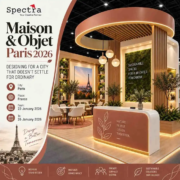
Maison & Objet Paris 2026: Designing for a City That Doesn’t Settle for Ordinary

Walk into most trade shows, and you’ll see the same thing everywhere, from pop-up banners to generic counters to maybe a TV screen looping a product video nobody’s watching. This approach may be applicable to industrial exhibitions, but it completely fails at Maison & Objet Paris. The 2026 edition of the exhibition aims to redefine contemporary interior design under two concepts — “Past Reveals Future,” which is organized in January, and “Pulse in Motion,” which is scheduled for September. The exhibition signifies a global shift from the sterile, mass-produced minimalism to spaces full of character and emotions, so the stalls must tell a visual story, not only showcase a product.

Designing for the Critical Eye

The audience walking these halls has seen it all, from Milan to London. They’re not impressed by size or by how many products get crammed onto a shelf. What actually stops them is restraint done well: a lighting choice that feels intentional, a material that invites touch, and a layout that breathes instead of overwhelms. A brand showing up at Maison & Objet Paris with the standard stall is not going to help. It should feel like a small, curated extension of the brand itself and do justice to the products being presented.

The Art of Spatial Curation in Paris

Quality design at this stage is all about influencing movement. Rather than putting one product after the other, it is better to organize zones. For example, you can create a serene reception zone for calm conversations with designers, several unique displays that tell different parts of the brand’s narrative, and a couple of eye-catching spots that quietly attract attention. Some important ideas to take into account while designing such a layout:

  • Ambient lighting that shifts mood by zone, rather than one flat wash of light across the whole exhibition stand
  • Material choices, such as matte over gloss and natural wood grain over polished plastic. A careful material choice signals craftsmanship rather than mass production
  • Sustainable and circular materials that hold a premium look without leaning on excess
  • Subtle tech, like hidden projection mapping, instead of loud screens competing for attention

A genuinely bespoke exhibition stand design earns its name here, and not by being expensive, but by being specific to the brand it represents.

Navigating Parisian Execution

None of this works without execution that matches the ambition. Paris Nord Villepinte runs on strict venue regulations, tight build windows, and finish standards that don’t leave room for shortcuts. This is precisely why working with experienced stand builders in France makes such a difference. Local teams understand the compliance side of things as well as the craftsmanship side, and at a show like this, both matter equally. A stand that looks stunning on paper but stumbles on installation day defeats the entire purpose of showing up.

A Different Philosophy

At Spectra Creatives, we never lose sight of the fact that any interior design exhibition needs an architectural approach instead of a building one. Each material, each sightline, and each quiet hospitality corner is treated as a component of our project rather than an additional detail attached to a booth. At the same time, the brands that everybody remembers at any exhibition are not always the loud ones. Instead, it is the brands that seem to fit almost perfectly into the exhibition space that people remember.

Potato Europe 2026

Potato Europe 2026: Maximizing Impact With a Bespoke Exhibition Stand Design

Whenever we get to know a trade show is going to take place, the first thing that comes to our mind is rows of shell-scheme booths under fluorescent lighting. However, Potato Europe isn’t that kind of show at all. It’s an open-air exhibition run with genuine field-day character, and that single fact changes almost every decision that goes into building a stand for it.

A Different Kind of Show, Held at a New Venue

Potato Europe 2026 runs on 9 and 10 September at the Rittergut Gestorf 1 estate near Hanover – the first time the show’s taken place at this particular venue. It’s part of a four-country rotation covering Germany, Belgium, France, and the Netherlands, and this year it runs alongside the newly launched SugarBeet Expo on the same grounds, which pulls in a broader mix of agricultural professionals than a potato-only show would draw on its own.

The whole event centres on live machinery demonstrations, working trial fields, and direct conversation between growers, processors, and equipment suppliers. Exhibitors here aren’t standing behind a counter handing out brochures  they’re running equipment, showing it working in actual field conditions, and talking through technical detail with people who genuinely understand the machinery. That context matters a lot for anyone planning an exhibition stand in Germany for this specific event, since a standard indoor-hall approach just doesn’t map onto an open field setting.

What Changes When the Show Is Outdoors

A stand built for a convention centre and a stand built for an open field aren’t solving the same problem. A few things become non-negotiable once you’re working outdoors:

  • Structures that actually handle weather, since September near Hanover can swing between sun, wind, and rain within the same afternoon
  • Ground conditions, given this is a working agricultural estate rather than a flat, paved exhibition floor
  • Visibility across open sightlines, where a stand competes for attention across much more distance than a tightly packed indoor aisle
  • Room built specifically for live demonstrations, since that’s where most of the actual exhibitor activity happens at this show

None of these on their own is complicated. Coordinating all of them together, inside a fixed footprint on unfamiliar terrain, is where the real planning work sits.

Why a Bespoke Approach Actually Matters Here

A generic booth template built for a standard trade fair doesn’t hold up well against these conditions, which is exactly the case for genuinely bespoke exhibition stand design rather than adapting something built for a different kind of event. Growers and agricultural technology buyers respond to practical clarity – clear signage, functional demonstration space, equipment that’s easy to see and easy to walk up to – rather than a polished, corporate-style display that would feel out of place next to a working field trial.

Spectra Creatives builds stands with this distinction in mind, treating an outdoor agricultural exhibition as a genuinely different design problem rather than shrinking down a convention-hall concept to fit a tent.

The Value of Working With Local Builders

Anyone planning to work with stand builders Germany trusts for this kind of show needs a team that actually understands outdoor exhibition builds – weatherproofing, ground assessment, and power distribution across a spread-out site, none of which come up the same way at an indoor venue. A team without that experience risks a structure that would perform fine at a typical convention centre but underperforms the moment wind picks up or the ground turns soft after rain.

Local execution also matters logistically. Coordinating installation around a working agricultural estate, rather than a standard loading dock and fixed move-in schedule, takes familiarity with how this specific type of venue actually operates on the ground.

Planning Around a New Venue

Because Rittergut Gestorf 1 is hosting the show for the first time, exhibitors are working with less established groundwork than they’d have at a returning location. Confirming ground access, power requirements, and structural specifications early matters more this year than it would at a familiar, previously used site. Waiting until the week before to sort these details out leaves very little room to adjust if something about the site doesn’t match expectations.

Bringing It All Together

A stand at Potato Europe succeeds by matching the actual environment it’s built for – weather-resistant, properly sited, and designed around live demonstration rather than static display. That’s a genuinely different brief from most trade shows, and treating it as one from the start avoids the scramble that comes from realising too late that an indoor concept doesn’t translate outdoors.

Spectra Creatives works with exhibitors well ahead of each show date, adapting design and build methods to the actual conditions a venue presents, from a convention hall floor to open field terrain near Hanover. So, the exhibitors arrive at Potato Europe 2026 with a stand genuinely built for the ground it’s standing on, not just a good-looking booth borrowed from a different kind of show.

MS&D Hamburg 2026

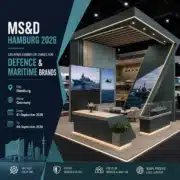
MS&D Hamburg 2026: Creating Exhibition Stands for Defence & Maritime Brands

Naval defence buyers don’t wander a show floor the way retail or consumer trade visitors do. They’re specialists like procurement officers, naval officials, and engineers, who show up with specific technical questions in mind, and a booth that can’t hold a serious technical conversation loses that visitor within the first minute. MS&D Hamburg runs from 1 to 4 September 2026 as part of SMM, and for exhibitors in maritime security and defence, the stand itself needs to signal credibility before a single word gets exchanged.

What Makes This Show Different from a Standard Trade Fair

MS&D’s evolution into a full Conference & Expo for 2026 means Hall B8 now serves as the dedicated naval hub of SMM, bringing the exhibition, the conference programme, and the central Naval Stage together in one space. The expo runs across the full four-day event, showcasing unmanned systems, cyber solutions, maritime surveillance technologies, and infrastructure protection systems, with dual-use technology playing an increasingly central role as it matters more to military buyers.

That combination changes what a booth needs to do. Visitors aren’t just browsing between the expo and a separate conference hall – the conference itself runs directly on the Naval Stage integrated into the exhibition floor, on 3 and 4 September, meaning conference attendees are moving in and out of the expo continuously rather than arriving on a separate schedule. A stand positioned well within that flow gets far more sustained attention than one tucked away from the main traffic pattern.

Who’s Actually Walking the Floor

MS&D positions itself as the leading technology, security, and procurement conference for Europe’s maritime security and defence community, drawing high-ranking representatives from the EU, national defence ministries, procurement authorities, and both civil maritime and naval defence industries. The current geopolitical climate has pushed numerous countries to expand naval capabilities, unmanned systems, and critical infrastructure protection, which means this year’s buyers are arriving with active budgets and specific procurement mandates, not just general market research.

Confirmed keynote speakers include Vice Admiral Carsten Stawitzki, Germany’s National Armaments Director, and Vice Admiral Axel Deertz, Deputy Inspector of the Navy and Commander of the Fleet – a signal of exactly how senior the audience gets during peak conference sessions.

Designing a Stand That Earns Trust in a Technical Sector

A few things separate a booth that performs well at a defence-focused show from one that just occupies space:

  • Restrained, professional visual language. Defence and maritime buyers respond to precision and clarity, not flashy consumer-style branding. Clean lines, technical signage, and a controlled colour palette tend to read as credible in this sector.
  • Private meeting zones built into the layout. Procurement conversations in defence rarely happen standing in an open aisle – enclosed or semi-private areas for serious discussion matter more here than at consumer-facing shows.
  • Space for live product or system demonstrations, particularly relevant given the show’s focus on unmanned systems and surveillance technology this year.
  • Security-conscious design, since some defence exhibitors need controlled access to certain areas of their stand for classified or restricted material.

None of these decisions is complicated individually, but getting them right within a fixed footprint and Hamburg Messe’s installation timeline takes proper planning well ahead of move-in week.

Why Local Execution Matters for This Sector Specifically

Any exhibitor working with an exhibition stand in Germany for the first time runs into the same friction – unfamiliar customs procedures for specialised equipment, local safety and electrical codes specific to Hamburg Messe, and installation windows that don’t leave room for error. That friction multiplies in the defence sector, where some equipment and materials require additional documentation or handling procedures that a local team already understands.

Working with established stand builders Germany trusts for defence and maritime exhibitors removes a lot of that risk. A team that’s built for this venue and this sector already knows the loading dock schedules for Hall B8, the compliance requirements around restricted materials, and the realistic timeline for a fully built, inspection-ready stand before doors open.

Bespoke Design for a Highly Specialised Audience

Off-the-shelf booth templates rarely work for defence and maritime brands, since the audience expects a level of precision and technical seriousness that generic stand designs don’t communicate. A properly built bespoke exhibition stand design gives exhibitors room to reflect their actual technical positioning – whether that’s cyber defence, unmanned systems, or infrastructure protection – rather than fitting into a one-size-fits-all layout built for a different kind of show entirely.

Spectra Creatives works with exhibitors preparing for specialised, technically demanding shows like this one, building stands that hold up to scrutiny from a highly informed audience while still functioning practically across four full days of conference and expo traffic.

Planning Ahead of September

With the show now roughly a week away, exhibitors still finalising their approach are working against a tight window. Given the seniority of this year’s attendees and the technical depth of the conference programme, a stand built around genuine credibility – not just visual polish – is what actually converts floor traffic into real procurement conversations.

Spectra Creatives works with exhibitors well in advance of each show date to turn a design brief into a fully built, ready-to-open stand at Hamburg Messe, positioned to perform for the specific audience MS&D brings through Hall B8.


Exhibition Stand in UK

How to Design an Exhibition Stand in UK When Floor Space Is Limited

In this case, better if you plan vertically, not horizontally. Most exhibitors default to spreading things out, and that’s what makes a small stand feel smaller. A tight footprint forces better decisions, fewer props, one message, cleaner sightlines, so the fundamentals of exhibition stand design UK teams rely on matter more here than on a huge stand where mistakes get hidden by sheer size.

At Spectra Creatives, we’ve seen plenty of stands where the space itself seems to be working against the design – odd corners, L-shaped layouts and walkways that leave barely enough room to squeeze through. Yet those limitations don’t always hurt a stand’s appeal. Quite often, a well-planned smaller booth gets more attention than a much larger one sitting right beside it.

What’s the Smartest Way to Plan a Small Exhibition Stand?

Think about foot traffic before you think about furniture. People avoid stands that feel closed in, so the entry point needs room to breathe even if that means sacrificing a display panel somewhere else.

  • Build up rather than out. Tension fabric walls and raised graphics do a lot of the visual work without eating floor space
  • Stick to one message. A stand trying to say five things at once usually communicates none of them well
  • Keep the entrance open. A funnel-shaped approach makes people hesitate before walking in
  • Choose furniture that pulls double duty, like a counter with storage underneath, instead of adding separate pieces

Which Stand Styles Actually Hold Up in a Tight Footprint?

A lot of exhibitors just shrink a big-stand idea to fit a small space. That doesn’t really work. Open layouts without a back wall tend to do better than closed-in ones, and an angled entrance draws in more people than a flat, straight-on one. Fabric graphics show up a lot in good exhibition booth designs for small spaces, mainly because they fold up small and go up fast. If you’re doing three or four shows a season, that speed matters more than it sounds like it should.

Does Lighting Actually Change How Big a Stand Feels?

It does, more than most people expect. Uplighting along a back wall pushes the eye outward and makes the space read as deeper than it is. Pale colours help too, since they bounce light rather than swallowing it. A mirrored panel adds visual depth without taking up real room. And oddly enough, leaving some space genuinely empty tends to read as more premium than filling every gap with signage.

Local Contractor or National Team, Which Makes More Sense?

If you’re exhibiting somewhere like the NEC, geography starts to matter in ways people don’t always plan for. Working with an exhibition stand contractor Birmingham based teams can reach without a long drive tends to mean quicker fixes on-site and less lag between a problem showing up and someone solving it.

  • Site visits happen faster when the team isn’t three hours away
  • Local knowledge of loading bays and venue rules saves time nobody has on build day
  • Transport costs stay lower for a smaller stand, which adds up over multiple shows
  • Dismantling and storage tend to go more smoothly with a nearby crew

Is a Bespoke Stand Worth It When Space Is This Limited?

Off-the-shelf modular pieces waste space you don’t have to spare. That’s where custom design earns its keep. The bespoke exhibition stands London exhibitors commission are usually built to the exact millimetre, nothing hanging over, nothing left short. At Spectra Creatives, that’s the starting point for any compact brief: measure the space first, design around what it actually allows, then work out materials and finish once the layout is locked.

So How Do You Pick the Right Design Partner?

Ask whoever you’re considering what questions they lead with. If it’s budget before objectives, that’s telling. The better work in exhibition stand design UK comes out of partners who get pulled in at the concept stage rather than handed a brief to execute. The same goes for exhibition booth designs worth remembering. They rarely come from whoever spent the most, they come from whoever understood what to leave out.

A Few Quick Questions

What’s the minimum space needed for an exhibition stand in the UK?

Shell scheme stands typically start around 9 square metres, though a well-planned layout can still land well below that.

How early should planning start for a small stand?

Roughly 8 to 10 weeks out, which leaves room for fabrication and any changes that come up along the way.

Can a small stand actually compete with the bigger ones on the floor?

Often, yes. A clear message and decent lighting will outdo a large, cluttered stand more often than people assume.

Ready to Make a Small Space Work Harder?

A tight footprint isn’t a limitation so much as a filter, it forces the good ideas to the front. Get in touch with Spectra Creatives and we’ll build something that earns its space.

Bespoke Exhibition Stand in Germany

5 Design Decisions That Make a Bespoke Exhibition Stand in Germany More Memorable

We get asked a lot what actually makes an exhibition stand in Germany stick with people. Usually it’s not one big thing. It’s the layout working properly, decent materials, good lighting, a story worth remembering, and a build that doesn’t waste half of itself after one show. Get most of that right and people bring your brand up weeks later, long after Hannover Messe or IFA Berlin has ended. At Spectra Creatives, we’ve seen one bad decision quietly ruin months of good planning.

1-Layout Flow That Keeps Visitors Walking In

A lot of exhibitors pour the budget into graphics and treat the floor plan as an afterthought. A narrow entrance, or a reception desk tucked behind a wall of banners, kills footfall before anyone’s said hello. What works better is simpler than people expect: open sightlines, a welcome area that reads clearly from a distance, and one spot to sit for longer conversations. Hannover Messe pulls in visitors from more than 60 countries most years, so a floor plan that makes sense at a glance counts for something. It’s a fast way to make an exhibition stand in Germany feel considered rather than thrown together.

2-Material Choices That Change How a Stand Feels

Timber, brushed metal, fabric panels, backlit acrylic, each sends a different message before a rep opens their mouth. A few patterns we’ve noticed:

  • Warm woods and soft textiles tend to suit lifestyle or wellness brands
  • Matte metal and glass lean precise, which works well for tech and engineering companies
  • Fabric structures pack down light, handy if you’re doing several cities in a row
  • Reusable modular panels save money over repeat bookings, and cut down on waste too

This is really the heart of bespoke exhibition stand design. Materials get chosen because they fit the brand standing inside them, not because they were sitting on a shelf.

3-Lighting Design That Shapes First Impressions

Lighting rarely gets the budget it deserves. Flat overhead lighting flattens whatever’s underneath it, and a well-built stand can end up looking like a warehouse aisle under the wrong fixtures. Layering helps: accent spots on hero products, something warmer near the seating, a bit brighter at the entrance. Small change, but it shifts how premium a space feels within seconds.

4-A Story Strong Enough to Influence Buying Decisions

More than most exhibitors give it credit for. Walk Frankfurt’s Messe complex for an afternoon and dozens of booths blur together. The ones people remember have one clear thread: what the product solves, who it’s for, why that matters now. What tends to hold that thread together:

  • One message you can read from ten metres away, not five competing ones
  • A single product people can actually touch, not just a spec sheet
  • Staff who can pitch it in two sentences, not a memorised script

An exhibition stand in Germany without a story usually ends up as “the one near the coffee stand,” not because it looked bad, just because nobody left with a reason to remember it.

5- Sustainable Building as a Genuine Selling Point

Germany hosts roughly two-thirds of the world’s leading international trade fairs, and organisers have spent the last few years pushing exhibitors toward reusable, lower-waste builds. Modular frames that get reconfigured for the next show, FSC-certified timber, water-based inks, none of it’s a box to tick anymore. German visitors, especially in industrial circles, actually ask about it. Skip that conversation on an exhibition stand in Germany and it starts looking dated fast.

Why Do These Five Decisions Work Best Together?

None of this works well in isolation, and that’s easy to miss. A beautifully lit stand with no story falls flat. A great story on cheap materials feels unconvincing before anyone reads a word of it. That’s the whole case for bespoke exhibition stand design: every piece supports the same idea, instead of getting cobbled together from a rental warehouse. It’s also why brands comparing stand builders Germany wide keep circling back to the same small group of studios, ones that treat design and fabrication as one job, not two separate hand-offs.

Spectra Creatives has built across enough German cities by now, Cologne, Munich, Frankfurt, to know which of these five decisions tends to slip when deadlines get tight, and which ones quietly decide whether a stand gets remembered past opening day.

Frequently Asked Questions

How far in advance should a bespoke stand be planned?

Most major fairs need somewhere around 8 to 12 weeks for a fully custom build. Larger footprints usually need more.

Do modular stands cost less than fully custom builds?

Often, at least upfront. Though a well-designed modular system can get reused across several shows, which changes the maths over time.

Is Frankfurt the best city for exhibition builds in Germany?

It’s certainly one of the busiest, given how many major fairs pass through it, which is part of why demand for exhibition stand builders Frankfurt stays steady year-round. Cologne, Munich, and Düsseldorf all see plenty of activity too, though.

Ready to Build Something Memorable?

If your next trade fair deserves more than a rented shell, Spectra Creatives can help you shape a stand that actually holds a room. Get in touch and let’s talk through what you’re building next.

Seafood Expo Asia 2026

Seafood Expo Asia 2026: How to Create an Impactful Exhibition Stand in Singapore

The seafood trade show requires exhibitors to combine smart refrigeration and live engagement, in accordance with the Asian seafood market, to truly capture the attention of seafood producers, processors, buyers, and technology suppliers. To do so, a booth has only seconds to earn its spot. Seafood Expo Asia returns to Marina Bay Sands from 2 to 4 September 2026, and with more than 360 exhibitors from over 40 countries expected on the floor, a stand that blends into the background isn’t a small miss. It’s a wasted three days.

The Scale You’re Competing Against

Alongside the exhibitor count, the show expects more than 4,000 seafood professionals attending from across Asia and beyond; the event will feature leading brands and more than 25 regional and country pavilions covering fresh and frozen seafood, processing and refrigeration equipment, and packaged products. That’s a dense, competitive floor where every stand is fighting for the same limited attention window per buyer.

The 2026 edition runs across Halls D, E and F at Level B2 of Sands Expo & Convention Centre, which means exhibitors aren’t just competing with their direct neighbours – they’re competing across three connected halls of similar-looking product categories. A booth that leans purely on product photography and a banner won’t hold up in that environment.

What Actually Separates a Memorable Stand from a Forgettable One

A few decisions made early in the design process tend to matter more than anything decided during move-in week:

  • Cold chain and hygiene presentation. Seafood buyers are trained to notice cleanliness and proper handling cues instantly – a stand that visually signals proper refrigeration or hygiene standards builds trust before a single word is exchanged.
  • Sampling and tasting zones built into the layout, not bolted on as an afterthought. Buyers in this sector make decisions partly through taste, so a stand without room for this loses a real advantage.
  • Clear sightlines from the aisle. With this many exhibitors on the floor, a stand needs to register within a few seconds of someone glancing down the row.
  • Space for private buyer conversations, since serious sourcing discussions rarely happen standing in an open walkway.

None of these is complicated individually, but coordinating them within a fixed footprint and a tight installation window is where most of the actual difficulty sits.

Working With Local Expertise for a Show of This Size

This is exactly where an event fabrication Singapore partner earns its value. Shipping a design in from overseas without a local production team on the ground introduces entirely avoidable risk – customs delays on cold-display fixtures, mismatched local safety codes, or a build that doesn’t match the approved renderings. An established local partner already understands Sands Expo’s loading schedules and move-in windows, which matters enormously across a show running in three separate halls.

An experienced exhibition stand builders Singapore team also handles the details that rarely show up in a planning document until they cause a delay – electrical approvals for refrigerated display units, water access for demonstration areas, and coordinating installation crews across a floor shared with hundreds of other exhibitors setting up in the same tight window.

Spectra Creatives works with exhibitors preparing for shows at exactly this scale, building stands that hold up under three days of heavy footfall while still working within the practical constraints of the venue’s build regulations and timelines.

Designing Around What Buyers Actually Respond To

The show focuses on advances in processing technology, automation, and food safety across the seafood supply chain, which gives exhibitors a natural direction for stand messaging this year. Brands whose booths visually reflect innovation – clean automation displays, clear traceability signage, modern equipment demonstrations – tend to align more closely with what the show is actively promoting to its buyer audience.

An exhibition design company Singapore brands trust for this kind of positioning understands that seafood buyers respond to specific visual cues: cleanliness, cold-chain integrity, and product freshness communicated through the stand itself, not just through spoken pitches.

Checking Who Else Is Exhibiting

Before finalising booth placement, it’s worth reviewing the official exhibitor list to understand which brands and country pavilions are confirmed for this year’s floor. That knowledge shapes more than competitive positioning – it can influence which hall and aisle placement makes the most sense for a given product category.

Planning Ahead of September

With the show roughly a week away at the time of writing, exhibitors still finalising their approach are working against a tightening window. Solid trade show booth design Singapore planning takes lead time – sourcing refrigeration-compatible fixtures, coordinating hygiene-compliant materials, and building in proper sampling space exhibitors can’t finalise these elements overnight.

Spectra Creatives works with exhibitors well ahead of each show date to turn a concept brief into a fully built, inspection-ready stand – one that’s ready to perform across all three days at Marina Bay Sands, not just look good on day one.

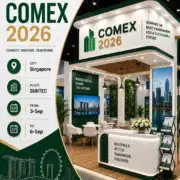
COMEX 2026 Singapore

COMEX 2026 Singapore: What Exhibitors Need to Know Before Building Their Booth

Suntec Singapore will host COMEX 2026 35th anniversary edition, which is the largest and longest-running annual IT exhibition. In order to stand out, exhibitors must design their booth which is both visually striking and functionally efficient while also reviewing all the local build guidelines before proceeding with any setup. From height caps to electrical load limits and floor space rules to heavy traffic pathways, these small details hold significant importance in ensuring you conduct a seamless execution and maximize your return on investment.

What COMEX 2026 Actually Brings to the Floor

This event will feature more than 400 leading brands showcasing gadgets and devices launched in the second half of the year, alongside show-only deals, promotions, and lucky draw prizes worth over SGD 300,000. It runs across Level 3 and Level 4 of Suntec Singapore, and represents a chance to reach around 500,000 tech enthusiasts and buyers across the four-day run. Categories on display span laptops, desktop PCs, smartphones, gaming equipment, smart home devices, and tech accessories – a genuinely broad mix, which means booths are competing for attention against a huge range of visual styles and product categories at once.

For exhibitors, that scale cuts both ways. The audience is enormous, but so is the competition for a visitor’s five seconds of attention while they walk the aisle.

Why the Booth Matters Equally as the Product at COMEX 2026

At a show this size, most visitors have already decided roughly what they’re interested in before they arrive. What decides whether they stop at your stand is almost entirely visual – colour, structure, lighting, how the space reads from twenty feet away. This is really where event fabrication Singapore teams earn their reputation, since a stand built and finished properly on-site is what separates a forgettable booth from one that actually pulls foot traffic.

A few things worth thinking through before COMEX 2026 opens its doors:

  • Booth layout should account for both Level 3 and Level 4 traffic patterns, since visitor flow differs across floors
  • Lighting needs to hold up against the venue’s own ambient lighting, not just look good in a rendering
  • Structural elements should be sturdy enough to survive four full days of daily 12 pm–9 pm crowds
  • Branding needs to be legible from a distance, not just up close

Choosing Between Exhibition Stand Builders in Singapore

Not every contractor works the same way, and the difference shows on the show floor. Reliable exhibition stand builders Singapore teams handle far more than assembly – they manage everything from initial design through to on-site fabrication, electrical work, and teardown once the show wraps. For a four-day event like COMEX, that end-to-end handling matters, since there’s very little room to fix a structural issue once doors are open to the public.

A few questions worth asking any contractor before committing:

  • Do they have prior experience building specifically within Suntec’s venue rules and load-in schedules?
  • Can they manage both design and on-site fabrication, or only one half of the process?
  • What’s their turnaround time between load-in and the actual show opening?

Working With an Exhibition Design Company in Singapore

Design and fabrication tend to work best when it comes from a single vendor, rather than two separate vendors trying to coordinate. An experienced exhibition design company Singapore, such as Spectra Creatives, already knows Suntec’s compliance rules for exhibiting. From layout constraints to height restrictions, they know exactly what is needed for COMEX’s competitive environment.

Trade Show Booth Design Singapore Brands Can Rely On

Good trade show booth design Singapore exhibitors invest in isn’t just about looking polished in photos. It’s about function – clear sightlines to your product, enough open space that visitors don’t feel funnelled, and a layout that supports actual conversations rather than just foot traffic passing by. At COMEX specifically, where the venue is accessible and hotels and food options are plentiful nearby, visitors tend to spend real time on the floor rather than rushing through, which makes booth comfort and flow genuinely worth the investment.

Getting Ready for September

With COMEX 2026 running from 3 to 6 September at Suntec, brands need to be prepared for booth design and fabrication. Between design approval and on-site build schedules, you need a plan thoughtfully, and a reliable exhibition stand partner like Spectra Creatives can go a long way in preparing smart exhibition stands.

Spectra Creatives works with exhibitors preparing for shows like COMEX 2026, handling design and fabrication from concept through to the final walkthrough on the show floor.