Posts

Advanced Textiles Expo 2026

Advanced Textiles Expo 2026: Preparing Your Booth for Standing Out

The textile and technical fabrics industry is set to gather in Orlando, USA, as Advanced Textiles Expo 2026 takes place from 3 to 5 November. The show brings together manufacturers, innovators, and suppliers working across performance textiles, industrial fabrics, and emerging material technologies. For exhibitors, this is a prime opportunity to showcase new products to a focused, industry-specific audience — but only if the booth is built to make an impact.

Standing Out on the Show Floor

In the presence of several specialized exhibitors, it is vital to distinguish yourself with more than just a table and signage. A powerful presence at Advanced Textiles Expo 2026 is contingent on an exhibit that can show one’s brand convincingly and draw customers in. It is at this moment that a partnership with exhibition stand design experts in Orlando proves its worth because the local expertise in arranging a venue’s logistics and layout helps one save time and budget.

What Exhibitors Should Prioritise

A few things exhibitors should prioritise while preparing for the show:

  • A layout that allows easy movement and clear sightlines to product displays
  • Lighting that highlights key materials or samples on show
  • Comfortable meeting areas for deeper product discussions
  • Branding that remains consistent across every panel and signage element

Getting the Construction Right

Working with experienced exhibition stand builders USA ensures that the construction phase runs smoothly, from approvals to on-site assembly, without last-minute surprises. Many companies also prefer collaborating with skilled exhibition booth designers USA who understand how to balance functionality with visual appeal, especially in a venue as large as Orlando’s convention space.

Planning Ahead with the Right Partner

Spectra Creatives has worked with exhibitors across multiple industries, helping them translate their goals into stands that are both practical and memorable. For brands considering a custom exhibition stand for this show, early planning is key — from concept approval to fabrication, every stage needs enough lead time to be executed well.

Final Thoughts

As Advanced Textiles Expo 2026 approaches, exhibitors who invest in thoughtful stand design, ideally with a partner like Spectra Creatives, stand a far better chance of making lasting connections on the show floor.

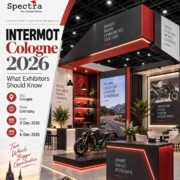
INTERMOT Cologne 2026

INTERMOT Cologne 2026: What Exhibitors Should Know

INTERMOT 2026 will take place from 3–6 December 2026 in Cologne, Germany, bringing together professionals and enthusiasts from the international motorcycle and mobility industry. The event provides a platform for manufacturers, suppliers, technology companies and industry professionals to present products, explore new developments and exchange ideas across the sector.

About INTERMOT 2026

INTERMOT is an international event focused on motorcycles, scooters, e-mobility, accessories, parts and related technologies. The exhibition environment provides companies with opportunities to present new products, demonstrate technologies and communicate directly with visitors from different markets.

For exhibitors, preparation involves considering how products and information will be presented within the allocated exhibition space. Stand layouts can vary depending on the type of products being displayed, the size of the space and the activities planned during the event.

Exhibition Stand Design for INTERMOT

Exhibition stand design plays an important role in organising an exhibitor’s space. A well-planned layout can include product display areas, information counters, demonstration zones and spaces for discussions with visitors.

For motorcycle and mobility brands, the design may also need to accommodate larger products such as motorcycles, scooters or technical equipment. Clear product positioning, appropriate lighting and accessible walkways can help visitors move through the stand and view the displays comfortably.

Custom Exhibition Stand Options

A Custom Exhibition Stand can be developed around the specific requirements of an exhibitor and the available floor area. Unlike standard exhibition systems, custom designs can incorporate different display formats, branding elements, meeting areas and product presentation zones.

Custom build exhibition stands can also be planned around product demonstrations and interactive experiences. For technology-focused exhibitors, dedicated areas may be used to explain technical features, applications or new developments to visitors.

Exhibition Stand Planning in Cologne

Preparing an exhibition stand involves more than the visual design. Exhibitors also need to consider venue regulations, technical requirements, installation schedules, logistics and dismantling arrangements.

Working with an experienced Custom Exhibition Stand Builder can involve coordinating these different stages, from initial concepts and production through to installation at the exhibition venue. Early planning allows exhibitors to consider their available space and requirements before the event.

Preparing for INTERMOT 2026

With INTERMOT 2026 taking place in Cologne from 3–6 December 2026, exhibitors can use the event to present products, demonstrate technologies and engage with professionals from the motorcycle and mobility sector.

Spectra Creatives can help with  planning the exhibition space in advance can help ensure that product displays, visitor areas and brand information are organised effectively. From Custom Exhibition Stand concepts to custom build exhibition stands, different approaches can be considered based on the exhibitor’s objectives, products and available exhibition space.

Custom Exhibition Stand

How to Plan a Custom Exhibition Stand: Design, Cost & Tips

“Custom” is one of those words that gets attached to everything – custom suits, custom cars, custom playlists. Most of the time it just means “made for you.” But in the exhibition world, that word carries a lot more weight. A custom exhibition stand isn’t a rental booth with your logo stuck on – it’s a structure engineered from scratch around your brand, your product, and how you want visitors to experience your space. At Spectra Creatives, we’ve been building these stands for brands across 7+ countries since 2008, so this guide walks through what actually goes into one – design, cost, and the details that separate a forgettable booth from one people talk about after the show.

What Exactly Counts as “Custom” in case of exhibition stand?

A custom stand is built specifically for one exhibitor, using a layout, materials, and graphics chosen for that brand alone – nothing pulled from a shared modular inventory. It’s designed to solve a specific problem: how do you get someone to stop walking and actually engage?

People often confuse this with “bespoke,” but there’s a meaningful difference. A bespoke exhibition stand design usually means a completely original build with no reused structural elements at all – every piece engineered fresh. A custom stand, on the other hand, can combine unique design elements with tested structural systems, which keeps quality high without inflating cost or build time unnecessarily. Both routes deliver a stand that actually looks like your brand rather than a hired shell.

What Makes a Custom Build Worth It?

The value isn’t just aesthetic – it shows up in how the space actually performs on the floor:

  • Layout built around your specific traffic patterns and product story
  • Room for demo areas, private meeting corners, or media walls
  • Two-storey or mezzanine construction where floor space is tight and visibility matters
  • Materials solid enough to be reused across multiple shows
  • Better footfall, which directly improves lead quality and follow-up conversations

Who Actually Needs One?

Not every exhibitor needs a fully custom build, but certain situations make it worth the investment. Brands launching a new product often want the entire stand designed around that single reveal moment. Established companies use custom builds to reinforce a consistent identity across shows in different countries – something we handle regularly for clients exhibiting across Europe, the Middle East, and Asia Pacific. Smaller or newer brands, meanwhile, often get the most dramatic return, since a well-designed stand lets them compete visually with much bigger players on the same floor.

Designing the Stand: Where the Real Work Happens

Good custom exhibition stand design starts before any sketching does – with the venue itself. Hall dimensions, entry points, and expected foot traffic all shape early decisions, which is why our design teams typically study the floor plan before proposing layouts.

From there, it’s about balance, contrast, and focus. Balance keeps a stand from feeling cluttered even when it’s packed with features. Contrast – through lighting, colour, or material texture – pulls the eye toward key zones like product displays or demo counters. Focus means picking one clear message and building the whole space to support it, rather than trying to say everything at once. Branding needs to sit naturally within this – logo placement, colour palette, and signage that reinforces identity without overwhelming the visitor.

A team offering full custom exhibition stand design and build under one roof – design, fabrication, and on-site installation – avoids the handoff gaps that often show up when these stages are managed by separate vendors.

Before the show itself, a few checks tend to save the most stress:

  • Walk the finished stand fully to catch graphic or signage inconsistencies
  • Test every screen, light, and tech integration ahead of time
  • Brief on-ground staff on product details and visitor flow
  • Confirm dismantling and storage logistics in advance, not on the last day

What Does It Cost?

Pricing swings a lot from project to project, and honestly, it should – a single-storey stand with a simple layout isn’t in the same league as a mezzanine build carrying AV screens and custom joinery. As a rough guide, compact stands stay closer to the lower end of the budget. Once you start adding bespoke fixtures, multimedia touches, or a second level, costs climb into the mid and higher brackets pretty quickly. But fixating on the final number misses the point a bit. What really matters is what that stand brings back – the leads it generates, the conversations it sparks, and whether people still remember your brand walking out of the hall.

Yes, custom built exhibition stands ask for more money upfront than a modular rental would. But run the numbers over two or three shows, and the gap starts closing fast – a well-built stand doesn’t fall apart after one use, so you’re not paying for the same thing twice.

That’s more or less how we’ve built our track record – over 2000 booths delivered so far, for brands showing up across the USA, Europe, the Middle East, and Asia Pacific. We stay involved through the whole thing, from the first sketch to the final teardown after the show ends.

If you’re planning your next show and want a stand that actually pulls its weight, talk to Spectra Creatives – we’d love to help you build it.


 

custom exhibition stand

Custom Exhibition Stand: 5 Mistakes That Cost Exhibitors Leads

Exhibiting at a trade show is a significant investment – floor space, travel, staffing, logistics, and the stand itself. Most exhibitors spend months planning the commercial side of the show and far less time thinking critically about the booth that’s supposed to make it all work. The result is a custom exhibition stand that looks fine on the outside but quietly bleeds leads throughout the event.

These are the five mistakes that come up repeatedly, and what they actually cost.

1. Designing for Photos, Not for People

A stand that photographs beautifully but doesn’t work in practice is one of the most common and expensive mistakes in custom exhibition stand design. Dramatic lighting rigs, bold geometric structures, and striking visual concepts are all legitimate design tools, but when exhibitors prioritise dramatic visuals over visitor flow, conversation space, and practical staff positioning, the booth ends up serving the Instagram post rather than the sales conversation.

Before the team approves any concept, the question worth asking is: where does a visitor naturally go when they walk into this space? and what do they do when they get there? If that question doesn’t have a clear answer in the design, it’s a problem that won’t get solved on the show floor.

2. Briefing a Builder Without a Strategy

A custom exhibition stand builder needs more than dimensions and a logo file. The brief has to include what the stand is supposed to achieve – which products are being featured, what kind of conversations the sales team needs to have, how many visitors the space needs to handle at peak times, and what a successful interaction looks like from start to finish.

Builders who receive a vague brief build a vague stand. The result is often a well-fabricated structure that doesn’t actually support the commercial objectives it was supposed to serve. The design process should start with strategy, not with aesthetics.

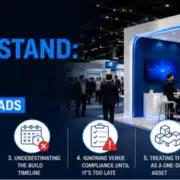
3. Underestimating the Build Timeline

Custom build exhibition stands take time – design, approval rounds, fabrication, quality checking, logistics, and on-site installation all need to happen in sequence. Compressing that timeline doesn’t make the stand cheaper or faster to produce; it just shifts the risk from the planning stage to the build stage, where problems are harder and more expensive to fix.

The most common version of this mistake is finalising the brief too late. A brief confirmed six weeks before a major show gives a very different outcome to one confirmed sixteen weeks out. The rushed timeline forces the production team to create a stand quickly, and the poor results from the show floor often trace back to the planning failure that caused them.

4. Ignoring Venue Compliance Until It’s Too Late

Every major exhibition venue has its own set of regulations – height restrictions, fire safety certifications, material standards, electrical requirements, rigging approvals, and build window constraints. These aren’t optional or negotiable, and venue authorities modify or remove a non-compliant stand before the show opens.

This happens more often than exhibitors expect, and almost always because compliance was treated as something to check at the end rather than something to design around from the start. When exhibitors build a custom exhibition stand without considering the specific venue’s rulebook, they may need to rebuild the stand partially or completely at their own expense and under significant time pressure.

5. Treating the Stand as a One-Show Asset

Exhibitors who use a custom stand once and then scrap it increase their exhibition costs and reduce their return on investment. Most well-designed custom build exhibition stands can be reconfigured, updated, and redeployed across multiple shows – different floor sizes, different markets, different objectives – with relatively minor modifications.

The brands that get the best return from their exhibition investment treat the stand as a long-term asset from the briefing stage. That means designing with modularity in mind, choosing materials that travel well and hold up across multiple events, and working with a builder who offers storage, maintenance, and refurbishment as part of the ongoing relationship rather than just a one-off fabrication job.

Getting It Right From the Start

Most of these mistakes share a root cause – decisions made too late, with too little information, by people who weren’t involved in the right conversations early enough. A custom exhibition stand design process that starts with strategy, accounts for venue compliance, and treats the brief seriously from day one produces stands that don’t just look good – they convert.

Spectra Creatives has been delivering custom exhibition stands across global markets since 2008, with 2000+ completed projects and clients including HP, Tata, Panasonic, and Biocon. Every project starts with a proper brief – not a template.