Posts

Bespoke Exhibition Stand in Germany

How to Make Better Use of Space with a Bespoke Exhibition Stand- Insight by Builder in Germany

Space efficiency starts with smart zoning, multi-level thinking, and furniture that earns its spot instead of sitting there for show. Even a modest 20 sqm plot can feel open and purposeful once it’s planned with intention rather than just filled to the edges. Here’s the mistake most exhibitors make without realising it – they pile in extra panels, extra shelves, extra everything, assuming more equals more value. It doesn’t. Nine times out of ten, it justa reads as clutter to someone walking past.

A well-designed exhibition stand in Germany works the opposite way- fewer distractions, clearer sightlines, and every metre earning its place. Most exhibitors only figure this out after their first cramped, easily-forgotten booth – a costly way to learn a fairly simple lesson.

What Makes Space for Bespoke Exhibition Stand Planning So Important at Trade Shows?

When you walk any hall at Messe Frankfurt or Messe Düsseldorf and you’ll notice how fast people judge a booth. Three seconds, maybe less, before someone decides whether to stop or keep moving. Germany hosts roughly two-thirds of the world’s leading trade fairs, so the competition for that split-second attention is genuinely tough. A cluttered layout gets ignored no matter how good the product is. This is exactly why a bespoke exhibition stand design matters so much here – it’s built to guide movement and put your message front and centre, not to just fill space.

How Do You Choose the Right Layout for Your Booth?

There’s no one “right” layout. It really depends on your goals, your product, and the space you have. Before choosing a floor plan, think about a few important things:

  • Map out where people will enter, pause, and exit
  • Set aside a semi-private corner for meetings or demos
  • Use vertical space – raised graphics, hanging structures – instead of relying only on the footprint
  • Keep walkways wide enough that visitors don’t feel boxed in

Get these basics right and the rest of an exhibition stand in Germany tends to fall into place without much fuss.

Bespoke Design and Every Square Metre

Modular kits off the shelf only stretch so far before they start looking like the stand two aisles over. That’s the trade-off nobody mentions upfront. A proper bespoke exhibition stand design flips that – storage tucked exactly where your team needs it, lighting angled to one hero product instead of flattening the whole space, furniture cut to fit that awkward corner plot rather than wasted around it. None of this is about looking pricier for the sake of it. It’s about the layout actually holding up once your team is standing in it for eight hours straight, talking to visitors, not just looking good in a render.

Why Work with Local Builders Instead of Importing a Stand?

This one surprises a lot of first-time exhibitors. Shipping a stand from abroad sounds simpler on paper, but rarely is in practice. Working with stand builders in Germany usually means:

  • No cross-border freight delays holding up your build-up
  • On-site fixes during setup instead of waiting days for replacement parts
  • Local knowledge of venue rules, load-in windows, and hall quirks

That local familiarity alone tends to save a genuinely stressful week.

Multi-Level and Modular Solutions That Save Space

If budget allows, double-decker structures are worth a serious look. A second level for meetings or storage effectively doubles your usable footprint without expanding the ground plan – a favourite move for anyone working with a tight lot at an exhibition stand in Germany. Modular elements also mean the same build can be reworked for the next fair rather than scrapped and rebuilt from zero.

Conclusion

Space efficiency isn’t an afterthought – it’s the foundation of a stand that actually works for your team and your visitors. Seasoned exhibition stand builders in Frankfurt know how to read a hall plan before the first panel even goes up, and that experience shows in the final result.

Ready to rethink your next stand? Talk to Spectra Creatives today.

 

Potato Europe 2026

Potato Europe 2026: Maximizing Impact With a Bespoke Exhibition Stand Design

Whenever we get to know a trade show is going to take place, the first thing that comes to our mind is rows of shell-scheme booths under fluorescent lighting. However, Potato Europe isn’t that kind of show at all. It’s an open-air exhibition run with genuine field-day character, and that single fact changes almost every decision that goes into building a stand for it.

A Different Kind of Show, Held at a New Venue

Potato Europe 2026 runs on 9 and 10 September at the Rittergut Gestorf 1 estate near Hanover – the first time the show’s taken place at this particular venue. It’s part of a four-country rotation covering Germany, Belgium, France, and the Netherlands, and this year it runs alongside the newly launched SugarBeet Expo on the same grounds, which pulls in a broader mix of agricultural professionals than a potato-only show would draw on its own.

The whole event centres on live machinery demonstrations, working trial fields, and direct conversation between growers, processors, and equipment suppliers. Exhibitors here aren’t standing behind a counter handing out brochures  they’re running equipment, showing it working in actual field conditions, and talking through technical detail with people who genuinely understand the machinery. That context matters a lot for anyone planning an exhibition stand in Germany for this specific event, since a standard indoor-hall approach just doesn’t map onto an open field setting.

What Changes When the Show Is Outdoors

A stand built for a convention centre and a stand built for an open field aren’t solving the same problem. A few things become non-negotiable once you’re working outdoors:

  • Structures that actually handle weather, since September near Hanover can swing between sun, wind, and rain within the same afternoon
  • Ground conditions, given this is a working agricultural estate rather than a flat, paved exhibition floor
  • Visibility across open sightlines, where a stand competes for attention across much more distance than a tightly packed indoor aisle
  • Room built specifically for live demonstrations, since that’s where most of the actual exhibitor activity happens at this show

None of these on their own is complicated. Coordinating all of them together, inside a fixed footprint on unfamiliar terrain, is where the real planning work sits.

Why a Bespoke Approach Actually Matters Here

A generic booth template built for a standard trade fair doesn’t hold up well against these conditions, which is exactly the case for genuinely bespoke exhibition stand design rather than adapting something built for a different kind of event. Growers and agricultural technology buyers respond to practical clarity – clear signage, functional demonstration space, equipment that’s easy to see and easy to walk up to – rather than a polished, corporate-style display that would feel out of place next to a working field trial.

Spectra Creatives builds stands with this distinction in mind, treating an outdoor agricultural exhibition as a genuinely different design problem rather than shrinking down a convention-hall concept to fit a tent.

The Value of Working With Local Builders

Anyone planning to work with stand builders Germany trusts for this kind of show needs a team that actually understands outdoor exhibition builds – weatherproofing, ground assessment, and power distribution across a spread-out site, none of which come up the same way at an indoor venue. A team without that experience risks a structure that would perform fine at a typical convention centre but underperforms the moment wind picks up or the ground turns soft after rain.

Local execution also matters logistically. Coordinating installation around a working agricultural estate, rather than a standard loading dock and fixed move-in schedule, takes familiarity with how this specific type of venue actually operates on the ground.

Planning Around a New Venue

Because Rittergut Gestorf 1 is hosting the show for the first time, exhibitors are working with less established groundwork than they’d have at a returning location. Confirming ground access, power requirements, and structural specifications early matters more this year than it would at a familiar, previously used site. Waiting until the week before to sort these details out leaves very little room to adjust if something about the site doesn’t match expectations.

Bringing It All Together

A stand at Potato Europe succeeds by matching the actual environment it’s built for – weather-resistant, properly sited, and designed around live demonstration rather than static display. That’s a genuinely different brief from most trade shows, and treating it as one from the start avoids the scramble that comes from realising too late that an indoor concept doesn’t translate outdoors.

Spectra Creatives works with exhibitors well ahead of each show date, adapting design and build methods to the actual conditions a venue presents, from a convention hall floor to open field terrain near Hanover. So, the exhibitors arrive at Potato Europe 2026 with a stand genuinely built for the ground it’s standing on, not just a good-looking booth borrowed from a different kind of show.

MS&D Hamburg 2026

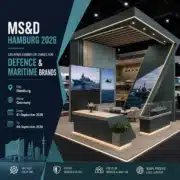
MS&D Hamburg 2026: Creating Exhibition Stands for Defence & Maritime Brands

Naval defence buyers don’t wander a show floor the way retail or consumer trade visitors do. They’re specialists like procurement officers, naval officials, and engineers, who show up with specific technical questions in mind, and a booth that can’t hold a serious technical conversation loses that visitor within the first minute. MS&D Hamburg runs from 1 to 4 September 2026 as part of SMM, and for exhibitors in maritime security and defence, the stand itself needs to signal credibility before a single word gets exchanged.

What Makes This Show Different from a Standard Trade Fair

MS&D’s evolution into a full Conference & Expo for 2026 means Hall B8 now serves as the dedicated naval hub of SMM, bringing the exhibition, the conference programme, and the central Naval Stage together in one space. The expo runs across the full four-day event, showcasing unmanned systems, cyber solutions, maritime surveillance technologies, and infrastructure protection systems, with dual-use technology playing an increasingly central role as it matters more to military buyers.

That combination changes what a booth needs to do. Visitors aren’t just browsing between the expo and a separate conference hall – the conference itself runs directly on the Naval Stage integrated into the exhibition floor, on 3 and 4 September, meaning conference attendees are moving in and out of the expo continuously rather than arriving on a separate schedule. A stand positioned well within that flow gets far more sustained attention than one tucked away from the main traffic pattern.

Who’s Actually Walking the Floor

MS&D positions itself as the leading technology, security, and procurement conference for Europe’s maritime security and defence community, drawing high-ranking representatives from the EU, national defence ministries, procurement authorities, and both civil maritime and naval defence industries. The current geopolitical climate has pushed numerous countries to expand naval capabilities, unmanned systems, and critical infrastructure protection, which means this year’s buyers are arriving with active budgets and specific procurement mandates, not just general market research.

Confirmed keynote speakers include Vice Admiral Carsten Stawitzki, Germany’s National Armaments Director, and Vice Admiral Axel Deertz, Deputy Inspector of the Navy and Commander of the Fleet – a signal of exactly how senior the audience gets during peak conference sessions.

Designing a Stand That Earns Trust in a Technical Sector

A few things separate a booth that performs well at a defence-focused show from one that just occupies space:

  • Restrained, professional visual language. Defence and maritime buyers respond to precision and clarity, not flashy consumer-style branding. Clean lines, technical signage, and a controlled colour palette tend to read as credible in this sector.
  • Private meeting zones built into the layout. Procurement conversations in defence rarely happen standing in an open aisle – enclosed or semi-private areas for serious discussion matter more here than at consumer-facing shows.
  • Space for live product or system demonstrations, particularly relevant given the show’s focus on unmanned systems and surveillance technology this year.
  • Security-conscious design, since some defence exhibitors need controlled access to certain areas of their stand for classified or restricted material.

None of these decisions is complicated individually, but getting them right within a fixed footprint and Hamburg Messe’s installation timeline takes proper planning well ahead of move-in week.

Why Local Execution Matters for This Sector Specifically

Any exhibitor working with an exhibition stand in Germany for the first time runs into the same friction – unfamiliar customs procedures for specialised equipment, local safety and electrical codes specific to Hamburg Messe, and installation windows that don’t leave room for error. That friction multiplies in the defence sector, where some equipment and materials require additional documentation or handling procedures that a local team already understands.

Working with established stand builders Germany trusts for defence and maritime exhibitors removes a lot of that risk. A team that’s built for this venue and this sector already knows the loading dock schedules for Hall B8, the compliance requirements around restricted materials, and the realistic timeline for a fully built, inspection-ready stand before doors open.

Bespoke Design for a Highly Specialised Audience

Off-the-shelf booth templates rarely work for defence and maritime brands, since the audience expects a level of precision and technical seriousness that generic stand designs don’t communicate. A properly built bespoke exhibition stand design gives exhibitors room to reflect their actual technical positioning – whether that’s cyber defence, unmanned systems, or infrastructure protection – rather than fitting into a one-size-fits-all layout built for a different kind of show entirely.

Spectra Creatives works with exhibitors preparing for specialised, technically demanding shows like this one, building stands that hold up to scrutiny from a highly informed audience while still functioning practically across four full days of conference and expo traffic.

Planning Ahead of September

With the show now roughly a week away, exhibitors still finalising their approach are working against a tight window. Given the seniority of this year’s attendees and the technical depth of the conference programme, a stand built around genuine credibility – not just visual polish – is what actually converts floor traffic into real procurement conversations.

Spectra Creatives works with exhibitors well in advance of each show date to turn a design brief into a fully built, ready-to-open stand at Hamburg Messe, positioned to perform for the specific audience MS&D brings through Hall B8.


Bespoke Exhibition Stand in Germany

5 Design Decisions That Make a Bespoke Exhibition Stand in Germany More Memorable

We get asked a lot what actually makes an exhibition stand in Germany stick with people. Usually it’s not one big thing. It’s the layout working properly, decent materials, good lighting, a story worth remembering, and a build that doesn’t waste half of itself after one show. Get most of that right and people bring your brand up weeks later, long after Hannover Messe or IFA Berlin has ended. At Spectra Creatives, we’ve seen one bad decision quietly ruin months of good planning.

1-Layout Flow That Keeps Visitors Walking In

A lot of exhibitors pour the budget into graphics and treat the floor plan as an afterthought. A narrow entrance, or a reception desk tucked behind a wall of banners, kills footfall before anyone’s said hello. What works better is simpler than people expect: open sightlines, a welcome area that reads clearly from a distance, and one spot to sit for longer conversations. Hannover Messe pulls in visitors from more than 60 countries most years, so a floor plan that makes sense at a glance counts for something. It’s a fast way to make an exhibition stand in Germany feel considered rather than thrown together.

2-Material Choices That Change How a Stand Feels

Timber, brushed metal, fabric panels, backlit acrylic, each sends a different message before a rep opens their mouth. A few patterns we’ve noticed:

  • Warm woods and soft textiles tend to suit lifestyle or wellness brands
  • Matte metal and glass lean precise, which works well for tech and engineering companies
  • Fabric structures pack down light, handy if you’re doing several cities in a row
  • Reusable modular panels save money over repeat bookings, and cut down on waste too

This is really the heart of bespoke exhibition stand design. Materials get chosen because they fit the brand standing inside them, not because they were sitting on a shelf.

3-Lighting Design That Shapes First Impressions

Lighting rarely gets the budget it deserves. Flat overhead lighting flattens whatever’s underneath it, and a well-built stand can end up looking like a warehouse aisle under the wrong fixtures. Layering helps: accent spots on hero products, something warmer near the seating, a bit brighter at the entrance. Small change, but it shifts how premium a space feels within seconds.

4-A Story Strong Enough to Influence Buying Decisions

More than most exhibitors give it credit for. Walk Frankfurt’s Messe complex for an afternoon and dozens of booths blur together. The ones people remember have one clear thread: what the product solves, who it’s for, why that matters now. What tends to hold that thread together:

  • One message you can read from ten metres away, not five competing ones
  • A single product people can actually touch, not just a spec sheet
  • Staff who can pitch it in two sentences, not a memorised script

An exhibition stand in Germany without a story usually ends up as “the one near the coffee stand,” not because it looked bad, just because nobody left with a reason to remember it.

5- Sustainable Building as a Genuine Selling Point

Germany hosts roughly two-thirds of the world’s leading international trade fairs, and organisers have spent the last few years pushing exhibitors toward reusable, lower-waste builds. Modular frames that get reconfigured for the next show, FSC-certified timber, water-based inks, none of it’s a box to tick anymore. German visitors, especially in industrial circles, actually ask about it. Skip that conversation on an exhibition stand in Germany and it starts looking dated fast.

Why Do These Five Decisions Work Best Together?

None of this works well in isolation, and that’s easy to miss. A beautifully lit stand with no story falls flat. A great story on cheap materials feels unconvincing before anyone reads a word of it. That’s the whole case for bespoke exhibition stand design: every piece supports the same idea, instead of getting cobbled together from a rental warehouse. It’s also why brands comparing stand builders Germany wide keep circling back to the same small group of studios, ones that treat design and fabrication as one job, not two separate hand-offs.

Spectra Creatives has built across enough German cities by now, Cologne, Munich, Frankfurt, to know which of these five decisions tends to slip when deadlines get tight, and which ones quietly decide whether a stand gets remembered past opening day.

Frequently Asked Questions

How far in advance should a bespoke stand be planned?

Most major fairs need somewhere around 8 to 12 weeks for a fully custom build. Larger footprints usually need more.

Do modular stands cost less than fully custom builds?

Often, at least upfront. Though a well-designed modular system can get reused across several shows, which changes the maths over time.

Is Frankfurt the best city for exhibition builds in Germany?

It’s certainly one of the busiest, given how many major fairs pass through it, which is part of why demand for exhibition stand builders Frankfurt stays steady year-round. Cologne, Munich, and Düsseldorf all see plenty of activity too, though.

Ready to Build Something Memorable?

If your next trade fair deserves more than a rented shell, Spectra Creatives can help you shape a stand that actually holds a room. Get in touch and let’s talk through what you’re building next.

SMM Hamburg 2026

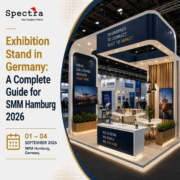
Exhibition Stand in Germany: A Complete Guide for SMM Hamburg 2026

SMM Hamburg is the world’s leading maritime trade fair. When it opens on 1 September 2026 at Hamburg Messe und Congress, it will draw 2,200+ exhibitors and over 48,000 visitors from more than 100 countries – shipbuilders, shipowners, naval architects, marine technology providers, port authorities, classification societies, and defence contractors who gather every two years in Hamburg to do serious business.

The 2026 theme is “driving the maritime transition” – decarbonisation, sustainable shipping, and energy-efficient ship technologies sit at the centre of the programme. That context shapes not just what’s being shown on the floor but what the audience expects from the brands showing it. For anyone planning an exhibition stand in Germany for SMM, the considerations start well before the build and go far beyond the visual design.

Understanding the SMM Floor Before the Brief Is Written

Hamburg Messe is one of the most professionally demanding exhibition venues in Europe. The halls are large, the exhibitor standard is consistently high, and the audience – buyers and decision-makers from across the global maritime supply chain – moves through the floor with specific objectives. Wärtsilä, SCHOTTEL, VULKAN Group, and most of the major names in marine engineering and propulsion have exhibited here for decades. Their booth presence reflects the commercial weight they bring to the show.

For any brand entering this environment, the exhibition booth design has to do more than look professional – it has to communicate technical credibility, product capability, and brand authority to an audience that knows the industry inside out and can spot a poorly considered stand from across the aisle.

Hamburg Messe: What German Exhibition Regulations Actually Require

German exhibition venues operate under strict technical regulations, and Hamburg Messe is no exception. Structural requirements for two-storey stands, DIN-compliant electrical installations, fire safety certification, aisle width regulations, material standards, and build and breakdown window constraints are all enforced – not suggested.

The process of producing a compliant exhibition stand in Germany requires engagement with these regulations from the design stage, not after the fact. Structural drawings need to be approved before fabrication begins. Electrical specifications need to meet German standards. Height and overhang restrictions vary by hall and need to be confirmed against the specific floor plan allocation before the concept is finalised.

An exhibition booth designer working in this market regularly will have existing relationships with Hamburg Messe’s technical team and a compliance process already built into their project workflow. One who doesn’t will discover the requirements on build day – which is a bad time to discover anything.

The Maritime Transition Theme Changes What Booths Need to Show

SMM 2026’s focus on decarbonisation and sustainable shipping isn’t just a conference theme -it’s what the audience is actively evaluating on the floor. Shipowners and operators attending SMM in 2026 are looking at alternative fuels, energy efficiency technologies, emissions monitoring systems, and digital fleet management solutions. Brands in these spaces need exhibition booth designs that reflect the innovation behind what they’re showing, not just a table of printed datasheets.

That means technology integration – interactive product demonstrations, data visualisation displays, digital twin presentations – needs to be built into the stand concept from the brief rather than added as an afterthought. The best exhibition stand design outcomes at technically sophisticated shows like SMM come from treating the booth as a product demonstration environment, not just a branded backdrop.

Bespoke vs Modular at SMM Hamburg

The choice between bespoke exhibition stand design and a modular system at SMM depends on what the brand needs to achieve on that specific floor. For brands making their first appearance at SMM with a limited product range and a modest floor allocation, a well-designed modular system can deliver a credible result without the investment of a full custom build.

For brands with larger floor allocations, complex product demonstrations, or private meeting requirements – all common at SMM – bespoke exhibition stand design consistently outperforms modular systems in how it handles these needs simultaneously. A custom build can be engineered around the specific technical and commercial objectives of the exhibitor rather than adapted from a standard configuration that wasn’t designed with those objectives in mind.

Starting Early Is Not Optional at This Show

SMM is a biennial event. The brands that perform consistently well here treat the two-year cycle as a planning window, not breathing room. For new exhibitors or those significantly upgrading their presence, a timeline of ten to sixteen weeks from confirmed brief to completed fabrication is realistic – which means September 2026 decisions need to be made now, and 2028 planning conversations should start well before 2027.

Spectra Creatives has been delivering exhibition stands across Germany and European maritime shows since 2008, with an established office in Germany, on-ground venue relationships across Hamburg Messe, and a client list that includes some of the most recognised names in industrial and technology exhibition.